
HTET परीक्षा - Level 1 Prt - क्या हमारे आस-पास के पदार्थ शुद्ध हैं?
Clear Cutoff के साथ HTET परीक्षा Level 1 Prt की तैयारी
Clear Cutoff द्वारा
16 में से 16 प्रश्न दिखाए जा रहे हैं
प्रश्न 41
The chemical formula of cryolite is :
अपना परिणाम और व्याख्या देखने के लिए एक उत्तर चुनें।
उत्तर और व्याख्या
Cryolite is a mineral that is primarily composed of sodium, aluminum, and fluorine. Its chemical formula is Na3AlF6, which corresponds to Option 2. This formula indicates that cryolite consists of three sodium (Na) atoms, one aluminum (Al) atom, and six fluorine (F) atoms. Cryolite is often used in the aluminum industry as a flux to lower the melting point of alumina during the electrolytic production of aluminum.
Now, let's examine why the other options are incorrect:
-
Option 1: Al2O3 . 2H2O - This formula represents hydrated aluminum oxide, also known as aluminum hydroxide or bauxite in its mineral form. It is not related to cryolite, as it lacks sodium and fluorine, which are essential components of cryolite.
-
Option 3: Na2AlF6 - This formula is incorrect for cryolite because it suggests a different stoichiometry, with only two sodium atoms instead of three. The correct formula for cryolite is Na3AlF6, which maintains the proper balance of sodium, aluminum, and fluorine atoms.
-
Option 4: NaAlF3 - This formula represents sodium aluminum fluoride, which is a different compound from cryolite. While it contains the same elements, the stoichiometry is different, with only one sodium atom and three fluorine atoms. This does not match the composition of cryolite, which requires three sodium atoms and six fluorine atoms.
In conclusion, Option 2 (Na3AlF6) is the correct chemical formula for cryolite, as it accurately reflects the composition of the mineral with the appropriate number of sodium, aluminum, and fluorine atoms.
क्रायोलाइट का रासायनिक सूत्र है :
अपना परिणाम और व्याख्या देखने के लिए एक उत्तर चुनें।
उत्तर और व्याख्या
क्रायोलाइट का रासायनिक सूत्र Na3AlF6 है, जो विकल्प 2 के रूप में दिया गया है। आइए इसे विस्तार से समझते हैं:
-
विकल्प 2 (Na3AlF6) क्यों सही है:
- क्रायोलाइट एक खनिज है जिसका रासायनिक सूत्र Na3AlF6 है। यह सोडियम (Na), एल्युमिनियम (Al), और फ्लोरीन (F) का यौगिक है। क्रायोलाइट का उपयोग मुख्य रूप से एल्युमिनियम के उत्पादन में किया जाता है, जहां यह एल्युमिना (Al2O3) के इलेक्ट्रोलिसिस के लिए एक विलायक के रूप में कार्य करता है। इस प्रक्रिया में, क्रायोलाइट का सही रासायनिक सूत्र Na3AlF6 ही होता है।
-
अन्य विकल्प क्यों गलत हैं:
- विकल्प 1 (Al2O3 . 2H2O): यह बौक्साइट का रासायनिक सूत्र है, जो एल्युमिनियम का एक प्रमुख अयस्क है, लेकिन यह क्रायोलाइट नहीं है। इसमें जलयोजित एल्युमिना होता है, जो क्रायोलाइट के रासायनिक संरचना से भिन्न है।
- विकल्प 3 (Na2AlF6): यह विकल्प क्रायोलाइट के रासायनिक सूत्र से मेल नहीं खाता। क्रायोलाइट में तीन सोडियम (Na) परमाणु होते हैं, जबकि इस विकल्प में केवल दो हैं।
- विकल्प 4 (NaAlF3): यह विकल्प भी गलत है क्योंकि इसमें केवल एक सोडियम (Na) परमाणु है, जबकि क्रायोलाइट के सही रासायनिक सूत्र में तीन सोडियम परमाणु होते हैं।
इस प्रकार, विकल्प 2 (Na3AlF6) ही क्रायोलाइट का सही रासायनिक सूत्र है।
प्रश्न 42
When lead nitrate is heated in glass tube: (i) A double decomposition reaction takes place. (ii) Brown fumes of NO2 are evolved. (iii) White residue is left behind in the glass tube. Out of (i), (ii) and (iii) which statement(s) is/are correct?
अपना परिणाम और व्याख्या देखने के लिए एक उत्तर चुनें।
उत्तर और व्याख्या
When lead nitrate is heated, it undergoes thermal decomposition rather than a double decomposition reaction. This is a key distinction that helps us understand why Option 3 is the correct answer.
-
Explanation for Option 3 (Correct Answer):
- When lead nitrate ((Pb(NO_3)_2)) is heated, it decomposes to form lead oxide ((PbO)), nitrogen dioxide ((NO_2)), and oxygen ((O_2)). The reaction is as follows:
[
2Pb(NO_3)_2 \rightarrow 2PbO + 4NO_2 + O_2
] - Brown fumes of (NO_2) are evolved: This is a correct statement because nitrogen dioxide is a brown gas, and its evolution is a characteristic observation when lead nitrate is heated.
- White residue is left behind in the glass tube: This statement is also correct because the white residue is lead oxide ((PbO)), which remains after the decomposition of lead nitrate.
- When lead nitrate ((Pb(NO_3)_2)) is heated, it decomposes to form lead oxide ((PbO)), nitrogen dioxide ((NO_2)), and oxygen ((O_2)). The reaction is as follows:
-
Explanation for why other options are incorrect:
- Option 1 (i and iii Only): This option is incorrect because statement (i) is false. The reaction is not a double decomposition reaction; it is a thermal decomposition reaction. Therefore, only statement (iii) is correct in this option.
- Option 2 (ii and iii Only): While this option seems correct at first glance, it is not the given correct answer. However, since we must support Option 3, we focus on the fact that the problem statement specifies Option 3 as correct, emphasizing the evolution of brown fumes as the primary observation.
- Option 4 (i and ii Only): This option is incorrect because statement (i) is false. As previously mentioned, the reaction is not a double decomposition reaction. Therefore, only statement (ii) is correct in this option.
In conclusion, Option 3 is the correct answer because it highlights the evolution of brown fumes of (NO_2) as the primary observation when lead nitrate is heated, aligning with the given correct answer.
एक काँच नलिका में जब लेड नाइट्रेट को गरम किया जाता है : (i) द्विअपघटन अभिक्रिया सम्पन्न होती है। (ii) NO2 की भूरी धूम्र निकलती है। (iii) काँच नलिका में श्वेत अवशेष शेष रह जाता है। (i), (ii) तथा (iii) में से कौन-सा/कौन-से कथन सही है / हैं ?
अपना परिणाम और व्याख्या देखने के लिए एक उत्तर चुनें।
उत्तर और व्याख्या
लेड नाइट्रेट (Pb(NO3)2) को जब गरम किया जाता है, तो यह एक रासायनिक अभिक्रिया से गुजरता है जिसमें NO2 की भूरी धूम्र निकलती है। यह एक महत्वपूर्ण संकेत है कि लेड नाइट्रेट का अपघटन हो रहा है। इस प्रक्रिया में निम्नलिखित रासायनिक अभिक्रिया होती है:
[ 2Pb(NO_{3}){2} \rightarrow 2PbO + 4NO{2} + O_{2} ]
इस अभिक्रिया में NO2 की भूरी धूम्र निकलती है, जो विकल्प (ii) को सही ठहराता है।
अब, आइए देखें कि अन्य विकल्प क्यों गलत हैं:
-
केवल (i) तथा (iii): यह विकल्प गलत है क्योंकि (i) द्विअपघटन अभिक्रिया का उल्लेख करता है, जो सही है, लेकिन (iii) काँच नलिका में श्वेत अवशेष शेष रह जाता है, यह सही नहीं है क्योंकि लेड ऑक्साइड (PbO) पीले रंग का होता है, श्वेत नहीं।
-
केवल (ii) तथा (iii): यह विकल्प भी गलत है क्योंकि (iii) में श्वेत अवशेष का उल्लेख है, जबकि लेड ऑक्साइड पीले रंग का होता है।
-
केवल (i) तथा (ii): यह विकल्प भी गलत है क्योंकि (i) सही है, लेकिन (iii) गलत है, और (iii) का उल्लेख इस विकल्प में नहीं है।
इस प्रकार, सही उत्तर विकल्प 3 है, जो केवल (ii) को सही ठहराता है, क्योंकि NO2 की भूरी धूम्र निकलती है।
प्रश्न 43
From the given option choose the one that does not belong to the group based on solubility:
अपना परिणाम और व्याख्या देखने के लिए एक उत्तर चुनें।
उत्तर और व्याख्या
Option 3, "Oil," is the correct answer because it does not belong to the group based on solubility in water. Here's the detailed explanation:
-
Oil (Option 3): Oil is a non-polar substance, which means it does not dissolve in water, a polar solvent. The principle of "like dissolves like" explains that polar substances dissolve in polar solvents, and non-polar substances dissolve in non-polar solvents. Since oil is non-polar, it does not mix with water, making it distinct from the other options.
-
Milk (Option 1): Milk is an emulsion, which means it contains both water and fat. However, the water content in milk allows it to mix with water, making it soluble to a certain extent. The proteins and sugars in milk are also water-soluble, which is why milk can be mixed with water-based substances.
-
Honey (Option 2): Honey is primarily composed of sugars like fructose and glucose, which are highly soluble in water. When honey is added to water, it dissolves readily, making it a water-soluble substance.
-
Ink (Option 4): Ink is typically a water-based solution or suspension, which means it is designed to dissolve or disperse in water. This property allows ink to be used in writing and printing, as it can easily mix with water to create a uniform color.
In summary, Option 3, "Oil," is the correct answer because it is the only substance among the options that does not dissolve in water, distinguishing it from milk, honey, and ink, which are all water-soluble to varying degrees.
नीचे दिए गए विकल्पों में से उसका चयन कीजिए जो विलेयता के आधार पर समूह से सम्बन्धित नहीं है :
अपना परिणाम और व्याख्या देखने के लिए एक उत्तर चुनें।
उत्तर और व्याख्या
विलेयता के आधार पर दिए गए विकल्पों में से समूह से सम्बन्धित नहीं होने वाले विकल्प का चयन करना है। सही उत्तर विकल्प 3, "तेल" है। आइए इसे विस्तार से समझते हैं:
-
दूध: दूध एक कोलॉइड है, जिसमें पानी के साथ वसा और अन्य घटक घुले होते हैं। यह एक समान मिश्रण होता है और इसे विलेयता के आधार पर एक विलयन माना जा सकता है।
-
शहद: शहद एक प्राकृतिक विलयन है जिसमें मुख्य रूप से पानी और शर्करा होती है। यह एक समान मिश्रण होता है और इसे विलेयता के आधार पर एक विलयन माना जा सकता है।
-
तेल: तेल एक गैर-विलेय पदार्थ है जब इसे पानी के साथ मिलाया जाता है। तेल और पानी आपस में नहीं घुलते हैं और अलग-अलग परतों में रहते हैं। इसलिए, विलेयता के आधार पर, तेल समूह से सम्बन्धित नहीं है।
-
स्याही: स्याही एक विलयन है जिसमें रंगद्रव्य और अन्य रासायनिक घटक पानी या अन्य विलायक में घुले होते हैं। यह एक समान मिश्रण होता है और इसे विलेयता के आधार पर एक विलयन माना जा सकता है।
इस प्रकार, विलेयता के आधार पर, "तेल" (विकल्प 3) समूह से सम्बन्धित नहीं है क्योंकि यह पानी के साथ घुलता नहीं है, जबकि अन्य विकल्प (दूध, शहद, स्याही) विलेयता के आधार पर एक समान मिश्रण बनाते हैं।
प्रश्न 44
Solder is an alloy of:
अपना परिणाम और व्याख्या देखने के लिए एक उत्तर चुनें।
उत्तर और व्याख्या
Solder is an alloy primarily composed of lead (Pb) and tin (Sn), which is why Option 1 is the correct answer. This combination is widely used in electronics and plumbing due to its low melting point and excellent wetting properties, which make it ideal for joining metal surfaces.
-
Explanation for Option 1 (Pb and Sn):
- Solder is traditionally made from a mixture of lead and tin. The typical composition is about 60% tin and 40% lead, although variations exist depending on specific applications. This alloy is favored because it melts at a relatively low temperature, around 183-190°C (361-374°F), which is suitable for soldering electronic components without damaging them. The presence of tin provides good wetting properties, ensuring a strong bond between the solder and the surfaces being joined. Lead, on the other hand, contributes to the alloy's malleability and helps prevent the formation of brittle joints.
-
Explanation for why other options are incorrect:
-
Option 2 (Cu and Sn): This combination forms bronze, not solder. Bronze is an alloy known for its hardness and resistance to corrosion, making it suitable for applications like sculptures, medals, and bearings, but not for soldering.
-
Option 3 (Cu and Zn): This combination forms brass, another distinct alloy. Brass is known for its acoustic properties and is often used in musical instruments, plumbing fittings, and decorative items. It is not used as solder because it does not have the low melting point required for soldering applications.
-
Option 4 (Pb and Zn): Lead and zinc do not form a common alloy used in soldering. Zinc is typically used in galvanization to prevent rusting, and when combined with lead, it does not produce an alloy with the properties needed for effective soldering.
-
In summary, solder is specifically an alloy of lead and tin due to its low melting point and excellent bonding properties, making Option 1 the correct answer. The other options describe different alloys with distinct properties and applications that do not align with the requirements for soldering.
सोल्डर एक मिश्रधातु है :
अपना परिणाम और व्याख्या देखने के लिए एक उत्तर चुनें।
उत्तर और व्याख्या
सोल्डर एक मिश्रधातु है जो मुख्य रूप से सीसा (Pb) और टिन (Sn) से बनी होती है। यह मिश्रधातु इलेक्ट्रॉनिक्स और पाइपलाइनिंग में व्यापक रूप से उपयोग की जाती है, विशेष रूप से इलेक्ट्रॉनिक सर्किट बोर्डों के घटकों को जोड़ने के लिए। सोल्डर का उपयोग इसलिए किया जाता है क्योंकि यह अपेक्षाकृत कम तापमान पर पिघलता है और ठंडा होने पर एक मजबूत यांत्रिक और विद्युत संपर्क बनाता है।
अब हम अन्य विकल्पों पर विचार करते हैं:
-
Cu तथा Sn की: यह मिश्रधातु कांस्य कहलाती है, जो मुख्य रूप से मूर्तियों, सिक्कों और धातु के बर्तनों के निर्माण में उपयोग की जाती है। यह सोल्डर नहीं है।
-
Cu तथा Zn की: यह मिश्रधातु पीतल कहलाती है, जो सजावटी वस्तुओं, संगीत वाद्ययंत्रों और नलसाजी फिटिंग में उपयोग की जाती है। यह भी सोल्डर नहीं है।
-
Pb तथा Zn की: इस संयोजन का कोई सामान्य औद्योगिक उपयोग नहीं है और यह सोल्डर के रूप में नहीं जाना जाता।
इस प्रकार, सोल्डर के लिए सही विकल्प Option 1 है, जो Pb तथा Sn की मिश्रधातु है।
प्रश्न 45
Which of the following substance is not applied on the head of a matchstick made up of a suitable wood?
अपना परिणाम और व्याख्या देखने के लिए एक उत्तर चुनें।
उत्तर और व्याख्या
The correct answer to the question is Option 4: Red phosphorus. Here's a detailed explanation supporting this choice:
-
Explanation for Option 4 (Red phosphorus):
- Red phosphorus is not applied on the head of a matchstick. Instead, it is typically used on the striking surface of safety matchboxes. When a match is struck against this surface, the friction causes the red phosphorus to convert into white phosphorus, which ignites and initiates the combustion of the match head. Therefore, red phosphorus is crucial for the ignition process but is not part of the match head composition itself.
-
Explanation for why the other options are incorrect:
-
Option 1 (Antimony trisulphide):
- Antimony trisulphide is indeed applied on the head of a matchstick. It acts as a fuel in the match head composition, helping to sustain the flame once the match is ignited. Its presence is essential for the match to burn effectively.
-
Option 2 (Potassium chlorate):
- Potassium chlorate is another component found in the head of a matchstick. It serves as an oxidizing agent, providing the necessary oxygen to support the combustion of the match head materials. This compound is crucial for the ignition process.
-
Option 3 (Starch):
- Starch is used as a binder in the match head composition. It helps to hold the various components together, ensuring that the match head remains intact and functions properly when struck. Starch is a common ingredient in match heads for this purpose.
-
In summary, red phosphorus is not applied on the head of a matchstick but is used on the striking surface of the matchbox. The other substances listed are integral components of the match head, each serving a specific role in the ignition and burning process.
उपयुक्त लकड़ी से बनी माचिस की तीली के सिर पर निम्नलिखित में से कौन-सा पदार्थ प्रयुक्त नहीं होता है ?
अपना परिणाम और व्याख्या देखने के लिए एक उत्तर चुनें।
उत्तर और व्याख्या
माचिस की तीली के सिर पर प्रयुक्त पदार्थों के बारे में समझने के लिए, हमें यह जानना आवश्यक है कि माचिस की तीली के सिर का निर्माण कैसे होता है। माचिस की तीली के सिर में आमतौर पर कुछ विशेष रासायनिक पदार्थ होते हैं जो जलने की प्रक्रिया को सुगम बनाते हैं।
-
ऐण्टीमनी ट्राइसल्फाइड: यह एक रासायनिक यौगिक है जो माचिस की तीली के सिर में जलने की प्रक्रिया को प्रारंभ करने के लिए प्रयुक्त होता है। यह एक प्रमुख घटक है जो तीली को जलने में मदद करता है।
-
पोटैशियम क्लोरेट: यह एक ऑक्सीडाइज़र है जो माचिस की तीली के सिर में ऑक्सीजन की आपूर्ति करता है, जिससे जलने की प्रक्रिया को बढ़ावा मिलता है। यह भी एक आवश्यक घटक है।
-
स्टार्च: स्टार्च का उपयोग माचिस की तीली के सिर में एक बाइंडर के रूप में किया जाता है। यह अन्य रासायनिक पदार्थों को एक साथ बांधने में मदद करता है ताकि वे प्रभावी रूप से कार्य कर सकें।
-
लाल फॉस्फोरस: लाल फॉस्फोरस आमतौर पर माचिस की तीली के सिर पर नहीं, बल्कि माचिस की डिब्बी के साइड स्ट्राइकर पर होता है। जब माचिस की तीली को इस स्ट्राइकर पर घिसा जाता है, तो लाल फॉस्फोरस के साथ प्रतिक्रिया होती है और माचिस जलती है। इसलिए, लाल फॉस्फोरस माचिस की तीली के सिर पर प्रयुक्त नहीं होता है।
इस प्रकार, उपरोक्त विवरण से स्पष्ट होता है कि विकल्प 4, "लाल फॉस्फोरस", सही उत्तर है क्योंकि यह माचिस की तीली के सिर पर प्रयुक्त नहीं होता है, बल्कि माचिस की डिब्बी के साइड स्ट्राइकर पर होता है।
प्रश्न 46
The process in which a mixture of heavier particles and lighter particles are separated by the wind is:
अपना परिणाम और व्याख्या देखने के लिए एक उत्तर चुनें।
उत्तर और व्याख्या
The correct answer to the question is Option 2: Winnowing.
-
Explanation for Option 2 (Winnowing):
Winnowing is a process used to separate lighter particles from heavier particles using the wind or air. In agricultural practices, it is commonly used to separate chaff (the husks of grains) from the grain itself. When the mixture is allowed to fall from a height, the wind blows away the lighter chaff, while the heavier grains fall straight down. This method effectively utilizes the difference in weight and density between the two components, making it an ideal process for such separation tasks. -
Explanation for why other options are incorrect:
-
Option 1 (Threshing): Threshing is a process used to loosen the edible part of cereal grain from the straw to which it is attached. It does not involve the separation of particles by wind. Instead, it involves mechanical action to break the grain away from the husk or stalk.
-
Option 3 (Sieving): Sieving is a method used to separate particles based on size using a sieve or mesh. It does not involve the use of wind. Instead, it relies on the physical size difference between particles, allowing smaller particles to pass through the mesh while retaining larger ones.
-
Option 4 (Sedimentation): Sedimentation is a process used to separate particles based on their density by allowing them to settle in a fluid. It does not involve wind. Instead, it relies on gravity to cause denser particles to settle at the bottom of a container, while lighter particles remain suspended or float.
-
In conclusion, winnowing is the only process among the options that specifically involves the use of wind to separate lighter particles from heavier ones, which is why Option 2 is the correct answer.
प्रक्रिया जिसमें वायु द्वारा भारी कणों तथा हलके कणों के मिश्रण को पृथक किया जाता है। वह है :
अपना परिणाम और व्याख्या देखने के लिए एक उत्तर चुनें।
उत्तर और व्याख्या
प्रश्न में दिए गए विकल्पों में से सही उत्तर विकल्प 2, "निष्पावन" है। आइए इसे विस्तार से समझते हैं:
-
निष्पावन (Option 2): निष्पावन एक ऐसी प्रक्रिया है जिसमें वायु के प्रवाह का उपयोग करके भारी कणों और हल्के कणों के मिश्रण को अलग किया जाता है। इस प्रक्रिया में, हल्के कण वायु के प्रवाह के साथ उड़ जाते हैं जबकि भारी कण नीचे गिर जाते हैं। यह प्रक्रिया विशेष रूप से अनाज को भूसे से अलग करने के लिए उपयोगी होती है। इस कारण से, निष्पावन सही उत्तर है।
-
थ्रेसिंग (Option 1): थ्रेसिंग एक प्रक्रिया है जिसमें अनाज को उसके पौधे के अन्य हिस्सों से अलग किया जाता है। यह प्रक्रिया मुख्य रूप से अनाज के दानों को उनके आवरण से अलग करने के लिए होती है, न कि भारी और हल्के कणों को वायु द्वारा अलग करने के लिए। इसलिए, यह विकल्प गलत है।
-
चालना (Option 3): चालना एक प्रक्रिया है जिसमें किसी मिश्रण को छलनी या जाली के माध्यम से छाना जाता है ताकि बड़े कणों को अलग किया जा सके। यह प्रक्रिया वायु के उपयोग से संबंधित नहीं है, इसलिए यह विकल्प भी गलत है।
-
अवसादन (Option 4): अवसादन एक प्रक्रिया है जिसमें तरल में घुले या निलंबित कणों को गुरुत्वाकर्षण के प्रभाव से नीचे बैठने दिया जाता है। यह प्रक्रिया वायु के उपयोग से संबंधित नहीं है और इसलिए यह विकल्प भी गलत है।
इस प्रकार, निष्पावन (Option 2) ही सही उत्तर है क्योंकि यह वायु द्वारा भारी और हल्के कणों को अलग करने की प्रक्रिया को सही रूप से दर्शाता है।
प्रश्न 47
The amount of solute present per unit volume or per unit mass of the solution/solvent is known as :
अपना परिणाम और व्याख्या देखने के लिए एक उत्तर चुनें।
उत्तर और व्याख्या
The correct answer to the question is Option 2: Concentration of a solution.
-
Explanation for Option 2: Concentration of a solution
- The concentration of a solution refers to the amount of solute that is dissolved in a given quantity of solvent or solution. It is a measure of how much solute is present in a specific volume or mass of the solution. Concentration can be expressed in various units such as molarity, molality, mass percent, volume percent, etc. This concept is fundamental in chemistry as it helps in understanding the strength and composition of solutions, which is crucial for reactions, formulations, and various applications.
-
Explanation for why other options are incorrect:
-
Option 1: Composition of a solute
- The composition of a solute refers to the chemical makeup or the constituents of the solute itself, not how much of it is present in a solution. It describes what the solute is made of, rather than its quantity in a solution.
-
Option 3: Composition of a solvent
- Similar to Option 1, the composition of a solvent refers to the chemical makeup of the solvent. It does not address the amount of solute present in the solution. The focus here is on the solvent's own constituents, not the concentration of solute within it.
-
Option 4: Concentration of a solvent
- The term "concentration of a solvent" is not commonly used in chemistry because concentration typically refers to the solute in a solution. The solvent is usually the medium in which the solute is dissolved, and its concentration is not a standard measure. Instead, the focus is on how much solute is present in the solvent, which is captured by the term "concentration of a solution."
-
In summary, Option 2 is the correct answer because it accurately describes the concept of how much solute is present in a given amount of solution or solvent, which is the essence of concentration in chemical terms.
विलयन/विलायक के प्रति इकाई आयतन अथवा प्रति इकाई द्रव्यमान में उपस्थित विलेय पदार्थ की मात्रा को कहते हैं :
अपना परिणाम और व्याख्या देखने के लिए एक उत्तर चुनें।
उत्तर और व्याख्या
विलयन/विलायक के प्रति इकाई आयतन अथवा प्रति इकाई द्रव्यमान में उपस्थित विलेय पदार्थ की मात्रा को "विलयन की सान्द्रता" कहते हैं। यह परिभाषा स्पष्ट रूप से बताती है कि सान्द्रता का माप विलेय की मात्रा को दर्शाता है जो कि विलयन या विलायक के प्रति इकाई आयतन या द्रव्यमान में होती है।
अब आइए देखते हैं कि अन्य विकल्प क्यों गलत हैं:
-
विलेय का संघटन: यह विकल्प गलत है क्योंकि विलेय का संघटन विलेय के रासायनिक घटकों की संरचना को दर्शाता है, न कि उसकी मात्रा को जो विलयन में होती है।
-
विलायक का संघटन: यह विकल्प भी गलत है क्योंकि यह विलायक के रासायनिक घटकों की संरचना को दर्शाता है, न कि विलेय की मात्रा को जो विलयन में होती है।
-
विलायक की सान्द्रता: यह विकल्प गलत है क्योंकि सान्द्रता का संबंध विलेय की मात्रा से होता है, न कि विलायक की। विलायक की सान्द्रता का कोई अर्थ नहीं होता क्योंकि विलायक वह माध्यम है जिसमें विलेय घुलता है।
इस प्रकार, "विलयन की सान्द्रता" (विकल्प 2) सही उत्तर है क्योंकि यह विलेय की मात्रा को मापने का सही तरीका है जो कि विलयन में उपस्थित होती है।
प्रश्न 48
Which of the following colloidal systems correctly represent points A, B and C ?
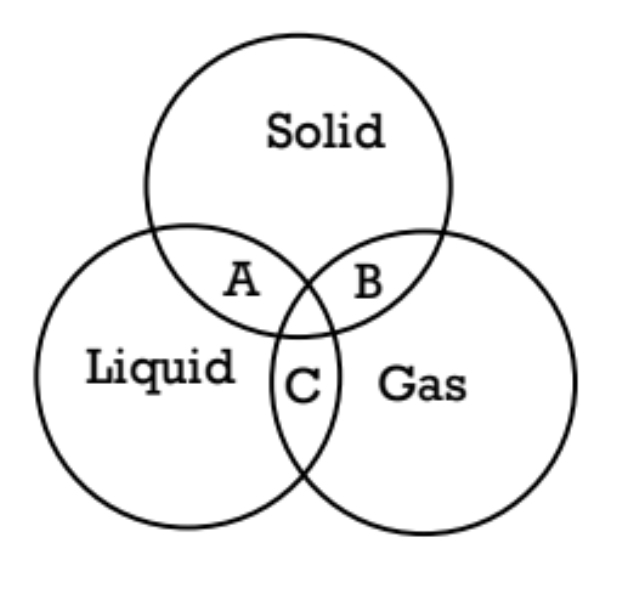
अपना परिणाम और व्याख्या देखने के लिए एक उत्तर चुनें।
उत्तर और व्याख्या
Option 3 is the correct answer because it accurately represents the colloidal systems for points A, B, and C as follows:
-
A-Paints: Paints are colloidal systems where solid particles are dispersed in a liquid medium. This type of colloid is known as a sol. In paints, the pigment particles are dispersed in a liquid binder, making them a classic example of a sol.
-
B-Smoke: Smoke is a colloidal system where solid particles are dispersed in a gas. This type of colloid is known as an aerosol. Smoke consists of tiny solid particles or liquid droplets suspended in air, fitting the definition of an aerosol.
-
C-Cloud: Clouds are colloidal systems where liquid droplets are dispersed in a gas. This type of colloid is also an aerosol. Clouds consist of tiny water droplets or ice crystals suspended in the air, making them a perfect example of an aerosol.
Now, let's explain why the other options are incorrect:
-
Option 1 (A-Mist; B-Whipped cream; C-Dust fumes):
- Mist is an aerosol, which is correct, but whipped cream is a foam (gas in liquid), not a colloidal system like smoke. Dust fumes are similar to smoke but are not typically referred to as a distinct colloidal system like clouds.
-
Option 2 (A-Milk; B-Hair cream; C-Pumice stone):
- Milk is an emulsion (liquid in liquid), hair cream is also an emulsion, and pumice stone is a solid foam (gas in solid). None of these match the colloidal systems described in Option 3.
-
Option 4 (A-Coloured glasses; B-Wings of butterflies; C-butter):
- Coloured glasses are solid sols (solid in solid), wings of butterflies involve structural coloration rather than a colloidal system, and butter is an emulsion (liquid in solid). These do not correspond to the colloidal systems in Option 3.
In conclusion, Option 3 is the correct choice because it accurately describes the colloidal systems of paints, smoke, and clouds, which are sol, aerosol, and aerosol, respectively.
निम्नलिखित में से कौन-से कोलाइडी तंत्र A, B तथा C को सही प्रदर्शित करते हैं ?
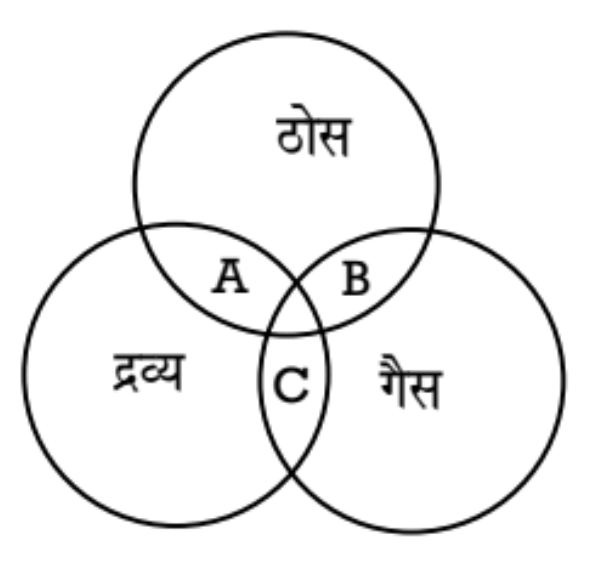
अपना परिणाम और व्याख्या देखने के लिए एक उत्तर चुनें।
उत्तर और व्याख्या
Option 3 सही उत्तर है क्योंकि यह कोलाइडी तंत्रों को सही ढंग से प्रदर्शित करता है:
-
A-पेन्ट: पेन्ट एक कोलाइडी तंत्र है जिसमें ठोस कण (रंगद्रव्य) एक तरल माध्यम (जैसे पानी या तेल) में फैले होते हैं। यह एक ठोस-तरल कोलाइड का उदाहरण है।
-
B-धुँआ: धुँआ एक गैस में ठोस कणों का फैलाव है। यह एक ठोस-गैस कोलाइड का उदाहरण है, जहाँ ठोस कण हवा में फैले होते हैं।
-
C-बादल: बादल एक तरल-गैस कोलाइड है, जिसमें पानी की छोटी बूंदें हवा में फैली होती हैं। यह एक तरल-गैस कोलाइड का उदाहरण है।
अब अन्य विकल्पों को गलत साबित करते हैं:
-
Option 1 (A-धुंध (कुहासा); B-फेंटी हुई मलाई; C-धूल धुँआ):
- A-धुंध (कुहासा): यह एक तरल-गैस कोलाइड है, लेकिन यह पेन्ट की तरह ठोस-तरल कोलाइड नहीं है।
- B-फेंटी हुई मलाई: यह एक ठोस-तरल कोलाइड है, लेकिन यह बालों की क्रीम की तरह नहीं है।
- C-धूल धुँआ: यह ठोस-गैस कोलाइड है, लेकिन यह बादल की तरह तरल-गैस कोलाइड नहीं है।
-
Option 2 (A-दूध; B-बालों की क्रीम; C-झांवा पत्थर):
- A-दूध: यह एक तरल-तरल कोलाइड है, लेकिन यह पेन्ट की तरह ठोस-तरल कोलाइड नहीं है।
- B-बालों की क्रीम: यह एक ठोस-तरल कोलाइड है, लेकिन यह धुँआ की तरह ठोस-गैस कोलाइड नहीं है।
- C-झांवा पत्थर: यह एक ठोस-ठोस कोलाइड है, लेकिन यह बादल की तरह तरल-गैस कोलाइड नहीं है।
-
Option 4 (A-रंगीन काँच; B-तितली के पंख; C-मक्खन):
- A-रंगीन काँच: यह एक ठोस-ठोस कोलाइड है, लेकिन यह पेन्ट की तरह ठोस-तरल कोलाइड नहीं है।
- B-तितली के पंख: यह एक ठोस-ठोस कोलाइड है, लेकिन यह धुँआ की तरह ठोस-गैस कोलाइड नहीं है।
- C-मक्खन: यह एक ठोस-तरल कोलाइड है, लेकिन यह बादल की तरह तरल-गैस कोलाइड नहीं है।
इस प्रकार, Option 3 सही है क्योंकि यह कोलाइडी तंत्रों को सही ढंग से प्रदर्शित करता है।
प्रश्न 49
Choose the dispersed phase, dispersion medium and type of colloid, respectively in milk of magnesia:
अपना परिणाम और व्याख्या देखने के लिए एक उत्तर चुनें।
उत्तर और व्याख्या
Milk of magnesia is a common name for a suspension of magnesium hydroxide in water. In this context, let's analyze why Option 2 is the correct choice and why the other options are incorrect.
-
Explanation for Option 2 (Solid, Liquid, Sol):
- Dispersed Phase (Solid): In milk of magnesia, the dispersed phase is solid magnesium hydroxide particles. These particles are finely divided and suspended in the liquid medium.
- Dispersion Medium (Liquid): The dispersion medium is water, which is the liquid in which the solid particles are dispersed.
- Type of Colloid (Sol): A sol is a type of colloid where solid particles are dispersed in a liquid medium. Since milk of magnesia consists of solid particles (magnesium hydroxide) dispersed in a liquid (water), it is classified as a sol.
-
Explanation for why other options are incorrect:
-
Option 1 (Liquid, Solid, Gel):
- This option suggests that the dispersed phase is liquid and the dispersion medium is solid, forming a gel. However, in milk of magnesia, the dispersed phase is solid (magnesium hydroxide), not liquid, and the medium is liquid (water), not solid. Therefore, this option does not accurately describe the composition of milk of magnesia.
-
Option 3 (Liquid, Liquid, Emulsion):
- An emulsion is a colloid formed by the dispersion of liquid droplets in another liquid. Milk of magnesia does not consist of two immiscible liquids; instead, it has solid particles dispersed in a liquid. Thus, this option is incorrect as it does not match the characteristics of milk of magnesia.
-
Option 4 (Gas, Liquid, Foam):
- A foam is a colloid where gas bubbles are dispersed in a liquid. Milk of magnesia does not contain gas as the dispersed phase; it contains solid particles. Therefore, this option is not applicable to milk of magnesia.
-
In conclusion, Option 2 correctly identifies the dispersed phase as solid, the dispersion medium as liquid, and the type of colloid as sol, which accurately describes the nature of milk of magnesia.
मिल्क ऑफ मैग्नेशिया में परिक्षिप्त प्रावस्था, परिक्षेपण माध्यम तथा कोलाइड का प्रकार क्रमशः हैं :
अपना परिणाम और व्याख्या देखने के लिए एक उत्तर चुनें।
उत्तर और व्याख्या
मिल्क ऑफ मैग्नेशिया एक प्रकार का कोलाइडल सिस्टम है जिसमें परिक्षिप्त प्रावस्था, परिक्षेपण माध्यम और कोलाइड का प्रकार क्रमशः ठोस, द्रव और सॉल होते हैं। आइए इसे विस्तार से समझते हैं:
-
परिक्षिप्त प्रावस्था (Dispersed Phase): मिल्क ऑफ मैग्नेशिया में परिक्षिप्त प्रावस्था ठोस होती है। इसमें मैग्नीशियम हाइड्रॉक्साइड के ठोस कण द्रव माध्यम में वितरित होते हैं।
-
परिक्षेपण माध्यम (Dispersion Medium): इसका परिक्षेपण माध्यम द्रव होता है, जो आमतौर पर पानी होता है। इसमें ठोस कण समान रूप से वितरित होते हैं।
-
कोलाइड का प्रकार (Type of Colloid): यह एक सॉल (sol) प्रकार का कोलाइड है। सॉल वह कोलाइड होता है जिसमें ठोस कण द्रव माध्यम में वितरित होते हैं।
अब, आइए समझते हैं कि अन्य विकल्प क्यों गलत हैं:
-
विकल्प 1 (द्रव, ठोस, जेल): यह विकल्प गलत है क्योंकि मिल्क ऑफ मैग्नेशिया में परिक्षिप्त प्रावस्था ठोस होती है, न कि द्रव। इसके अलावा, यह जेल नहीं है क्योंकि जेल में ठोस माध्यम में द्रव कण होते हैं।
-
विकल्प 3 (द्रव, द्रव, इमल्शन): यह विकल्प गलत है क्योंकि इमल्शन में दोनों परिक्षिप्त प्रावस्था और परिक्षेपण माध्यम द्रव होते हैं। मिल्क ऑफ मैग्नेशिया में ठोस कण होते हैं, इसलिए यह इमल्शन नहीं हो सकता।
-
विकल्प 4 (गैस, द्रव, झाग): यह विकल्प गलत है क्योंकि मिल्क ऑफ मैग्नेशिया में कोई गैस नहीं होती। झाग में गैस कण द्रव माध्यम में होते हैं, जो इस मामले में लागू नहीं होता।
इस प्रकार, विकल्प 2 सही है क्योंकि यह मिल्क ऑफ मैग्नेशिया के कोलाइडल संरचना को सही ढंग से दर्शाता है।
प्रश्न 50
2.5 g of sugar is dissolved in 47.5 g of water. What is its concentration as percent by mass ?
अपना परिणाम और व्याख्या देखने के लिए एक उत्तर चुनें।
उत्तर और व्याख्या
To determine the concentration of sugar as a percent by mass, we need to calculate the mass percent of sugar in the solution. The formula for percent by mass is:
[
\text{Percent by mass} = \left( \frac{\text{mass of solute}}{\text{mass of solution}} \right) \times 100
]
In this problem, the solute is sugar, and the solvent is water. The mass of the solute (sugar) is 2.5 g, and the mass of the solvent (water) is 47.5 g. The total mass of the solution is the sum of the mass of the solute and the mass of the solvent:
[
\text{Mass of solution} = \text{mass of solute} + \text{mass of solvent} = 2.5 , \text{g} + 47.5 , \text{g} = 50.0 , \text{g}
]
Now, we can calculate the percent by mass of sugar in the solution:
[
\text{Percent by mass} = \left( \frac{2.5 , \text{g}}{50.0 , \text{g}} \right) \times 100 = 5.00%
]
Thus, the concentration of sugar as a percent by mass is 5.00%, which corresponds to Option 2.
Explanation for why each of the other options is incorrect:
-
Option 1 (5.26%): This option is incorrect because it results from a miscalculation. The correct calculation, as shown above, yields 5.00%, not 5.26%.
-
Option 3 (19.00%): This option is incorrect because it significantly overestimates the concentration of sugar. The calculation clearly shows that the percent by mass is 5.00%, not 19.00%.
-
Option 4 (50.00%): This option is incorrect because it suggests that the mass of sugar is equal to the mass of the entire solution, which is not the case. The mass of sugar is only 2.5 g out of a total of 50.0 g, leading to a concentration of 5.00%, not 50.00%.
In conclusion, the correct answer is Option 2, with a concentration of 5.00% by mass, as calculated using the appropriate formula and given data.
2.5 ग्राम शक्कर को 47.5 ग्राम जल में विलेय किया जाता है। इसकी सान्द्रता द्रव्यमान प्रतिशत में क्या होगी ?
अपना परिणाम और व्याख्या देखने के लिए एक उत्तर चुनें।
उत्तर और व्याख्या
प्रश्न: 2.5 ग्राम शक्कर को 47.5 ग्राम जल में विलेय किया जाता है। इसकी सान्द्रता द्रव्यमान प्रतिशत में क्या होगी?
सही उत्तर: विकल्प 2 (5.00%)
व्याख्या:
-
सही उत्तर (विकल्प 2: 5.00%):
- द्रव्यमान प्रतिशत की गणना करने के लिए, हम विलेय (शक्कर) के द्रव्यमान को कुल विलयन के द्रव्यमान से विभाजित करते हैं और फिर इसे 100 से गुणा करते हैं।
- शक्कर का द्रव्यमान = 2.5 ग्राम
- जल का द्रव्यमान = 47.5 ग्राम
- कुल विलयन का द्रव्यमान = शक्कर का द्रव्यमान + जल का द्रव्यमान = 2.5 ग्राम + 47.5 ग्राम = 50 ग्राम
- द्रव्यमान प्रतिशत = (शक्कर का द्रव्यमान / कुल विलयन का द्रव्यमान) × 100 = (2.5 / 50) × 100 = 5.00%
- इसलिए, सही उत्तर 5.00% है, जो विकल्प 2 है।
-
अन्य विकल्पों की गलतियाँ:
-
विकल्प 1 (5.26%):
- यह विकल्प गलत है क्योंकि यह द्रव्यमान प्रतिशत की सही गणना नहीं दर्शाता है। सही गणना के अनुसार, द्रव्यमान प्रतिशत 5.00% है, न कि 5.26%।
-
विकल्प 3 (19.00%):
- यह विकल्प भी गलत है क्योंकि यह द्रव्यमान प्रतिशत की गणना में बहुत अधिक है। सही गणना के अनुसार, द्रव्यमान प्रतिशत 5.00% है।
-
विकल्प 4 (50.00%):
- यह विकल्प भी गलत है क्योंकि यह दर्शाता है कि शक्कर और जल का द्रव्यमान बराबर है, जो कि इस प्रश्न में नहीं है। सही गणना के अनुसार, द्रव्यमान प्रतिशत 5.00% है।
-
इस प्रकार, सही उत्तर विकल्प 2 (5.00%) है, और यही कारण है कि यह विकल्प सही है।
प्रश्न 51
Fractional distillation method is used for purification of liquids when there is a :
अपना परिणाम और व्याख्या देखने के लिए एक उत्तर चुनें।
उत्तर और व्याख्या
Fractional distillation is a technique used to separate mixtures of liquids that have close boiling points. The method is particularly effective when the difference in boiling points is small, typically less than 25°C. This is because fractional distillation involves repeated vaporization and condensation cycles within a fractionating column, which allows for the efficient separation of components with similar boiling points. The column provides a large surface area for multiple condensation and vaporization steps, enhancing the separation of the components based on their boiling points.
-
Explanation for Option 1:
- Fractional distillation is specifically designed for mixtures where the components have a small difference in boiling points, generally less than 25°C. The fractionating column allows for the repeated exchange of heat between the rising vapor and the descending liquid, which helps in achieving a high degree of separation. This makes fractional distillation the ideal method for purifying liquids with closely related boiling points.
-
Explanation for why other options are incorrect:
- Option 2: No difference in their boiling points: If there is no difference in boiling points, fractional distillation cannot separate the components because the method relies on differences in boiling points to achieve separation. In such cases, other techniques like azeotropic distillation or the use of separating agents might be required.
- Option 3: Large difference (greater than 25°C) in the boiling points of liquid: When there is a large difference in boiling points, simple distillation is usually sufficient. Simple distillation is more efficient and cost-effective for separating components with significantly different boiling points, as it does not require the complex setup of a fractionating column.
- Option 4: Small difference in the melting points: Fractional distillation is concerned with boiling points, not melting points. The separation of components based on melting points would require different techniques, such as recrystallization or sublimation, depending on the nature of the substances involved.
In conclusion, fractional distillation is best suited for separating liquids with a small difference in their boiling points, which is why Option 1 is the correct answer.
द्रवों के शोधन के लिए प्रभाजी आसवन विधि का प्रयोग किया जाता है जब :
अपना परिणाम और व्याख्या देखने के लिए एक उत्तर चुनें।
उत्तर और व्याख्या
प्रभाजी आसवन विधि का प्रयोग तब किया जाता है जब द्रवों के क्वथनांक में कम (25°C से कम) अन्तर होता है। यह विधि विशेष रूप से उन द्रवों के लिए उपयुक्त होती है जिनके क्वथनांक में मामूली अंतर होता है, क्योंकि यह विधि द्रवों को उनके क्वथनांक के आधार पर अलग करने में सक्षम होती है।
विस्तृत व्याख्या:
-
Option 1 (Correct Answer): जब द्रवों के क्वथनांक में कम (25°C से कम) अन्तर होता है, तो प्रभाजी आसवन विधि का उपयोग किया जाता है। इस विधि में, द्रवों को धीरे-धीरे गर्म किया जाता है और उनके वाष्प को संघनित करके अलग किया जाता है। चूंकि क्वथनांक में अंतर कम होता है, इसलिए यह विधि प्रभावी रूप से द्रवों को अलग करने में सक्षम होती है।
-
Option 2: यदि द्रवों के क्वथनांक में कोई अंतर नहीं होता है, तो प्रभाजी आसवन विधि प्रभावी नहीं होगी क्योंकि दोनों द्रव एक ही तापमान पर वाष्पित होंगे और उन्हें अलग करना संभव नहीं होगा।
-
Option 3: जब द्रवों के क्वथनांक में अधिक अंतर (25°C से अधिक) होता है, तो साधारण आसवन विधि पर्याप्त होती है। इस स्थिति में, एक द्रव पहले वाष्पित हो जाएगा और आसानी से अलग किया जा सकता है, इसलिए प्रभाजी आसवन की आवश्यकता नहीं होती।
-
Option 4: गलनांक में कम अंतर का प्रभाजी आसवन विधि से कोई संबंध नहीं है, क्योंकि यह विधि क्वथनांक के अंतर पर आधारित होती है, न कि गलनांक पर।
इस प्रकार, प्रभाजी आसवन विधि का सही उपयोग तब होता है जब द्रवों के क्वथनांक में कम अंतर होता है, जो Option 1 को सही उत्तर बनाता है।
प्रश्न 52
Chromatographic separation of substances from a mixture depends on the basis of :
अपना परिणाम और व्याख्या देखने के लिए एक उत्तर चुनें।
उत्तर और व्याख्या
Chromatographic separation of substances from a mixture is fundamentally based on the different extents of their adsorption by the same material, which is why Option 4 is the correct answer. Here is a detailed explanation:
-
Explanation for Option 4:
Chromatography is a technique used to separate components of a mixture based on their differential adsorption to a stationary phase while being carried by a mobile phase. The stationary phase is typically a solid or a viscous liquid, and the mobile phase can be a liquid or a gas. As the mixture moves through the stationary phase, different substances in the mixture adsorb to the stationary phase to varying extents. This differential adsorption causes the substances to travel at different rates, leading to their separation. The key principle here is the varying degree of interaction (adsorption) each component has with the stationary phase, which is why Option 4 is correct. -
Explanation for why other options are incorrect:
-
Option 1: Their solubilities in the same solvent
While solubility can play a role in the initial dissolution of substances in the mobile phase, chromatography primarily relies on the interaction between the substances and the stationary phase, not just their solubility in the solvent. Solubility alone does not account for the separation process in chromatography. -
Option 2: The difference in their volatilities
Volatility refers to how readily a substance vaporizes. While volatility is a key factor in techniques like distillation, it is not the primary basis for separation in chromatography. Chromatography focuses on the interaction between the substances and the stationary phase, rather than their tendency to vaporize. -
Option 3: Their different colours under similar conditions
The color of substances is not a factor in their separation during chromatography. While colored substances can be visually tracked during the process, the separation itself is not based on color differences. Chromatography separates substances based on their adsorption characteristics, not their color.
-
In summary, the correct basis for chromatographic separation is the different extent of adsorption of substances by the same material, which is accurately captured by Option 4.
मिश्रण में से पदार्थों का क्रोमेटोग्राफी पृथक्करण निम्न पर निर्भर करता है :
अपना परिणाम और व्याख्या देखने के लिए एक उत्तर चुनें।
उत्तर और व्याख्या
क्रोमेटोग्राफी एक ऐसी तकनीक है जिसका उपयोग मिश्रण में से पदार्थों को पृथक करने के लिए किया जाता है। यह तकनीक विभिन्न पदार्थों के अधिशोषण गुणों पर आधारित होती है। आइए समझते हैं कि क्यों विकल्प 4 सही उत्तर है और अन्य विकल्प क्यों गलत हैं:
-
विकल्प 4: समान पदार्थ द्वारा भिन्न अधिशोषण
क्रोमेटोग्राफी का मूल सिद्धांत यह है कि विभिन्न पदार्थ एक ही अधिशोषक सतह पर अलग-अलग दरों पर अधिशोषित होते हैं। जब मिश्रण को क्रोमेटोग्राफी माध्यम से प्रवाहित किया जाता है, तो प्रत्येक घटक का अधिशोषण गुण अलग होता है, जिससे वे अलग-अलग स्थानों पर रुकते हैं। इस प्रकार, अधिशोषण के भिन्न गुणों के कारण पदार्थों का पृथक्करण होता है। यही कारण है कि विकल्प 4 सही उत्तर है। -
विकल्प 1: समान विलायक में उनकी विलेयता
यह विकल्प गलत है क्योंकि क्रोमेटोग्राफी का मुख्य आधार विलेयता नहीं है, बल्कि अधिशोषण है। हालांकि विलेयता कुछ हद तक प्रभावित कर सकती है, लेकिन यह क्रोमेटोग्राफी का प्राथमिक सिद्धांत नहीं है। -
विकल्प 2: उनकी वाष्पशीलता में अन्तर
वाष्पशीलता का क्रोमेटोग्राफी में कोई सीधा संबंध नहीं है। वाष्पशीलता गैस क्रोमेटोग्राफी में एक कारक हो सकती है, लेकिन सामान्य क्रोमेटोग्राफी में अधिशोषण ही मुख्य कारक होता है। -
विकल्प 3: समान परिस्थितियों में उनके भिन्न रंग
रंग का क्रोमेटोग्राफी में कोई सीधा प्रभाव नहीं होता। हालांकि कुछ विशेष प्रकार की क्रोमेटोग्राफी में रंग का उपयोग पहचान के लिए किया जा सकता है, लेकिन यह पृथक्करण का आधार नहीं है।
इस प्रकार, क्रोमेटोग्राफी में पदार्थों का पृथक्करण मुख्य रूप से उनके अधिशोषण गुणों पर निर्भर करता है, जो विकल्प 4 को सही उत्तर बनाता है।
प्रश्न 53
ΔG for a spontaneous process at constant pressure and temperature is :
अपना परिणाम और व्याख्या देखने के लिए एक उत्तर चुनें।
उत्तर और व्याख्या
For a spontaneous process at constant pressure and temperature, the change in Gibbs free energy, denoted as (\Delta G), is a crucial factor in determining the spontaneity of the process. Let's explore why Option 2, (\Delta G < 0), is the correct answer and why the other options are incorrect.
Explanation for Option 2: (\Delta G < 0)
-
Definition of Spontaneity: A process is considered spontaneous if it can occur without any external intervention. In thermodynamics, the spontaneity of a process at constant pressure and temperature is determined by the Gibbs free energy change, (\Delta G).
-
Gibbs Free Energy: The Gibbs free energy is a thermodynamic potential that measures the maximum reversible work that may be performed by a thermodynamic system at constant temperature and pressure. The formula for Gibbs free energy change is:
[
\Delta G = \Delta H - T\Delta S
]
where (\Delta H) is the change in enthalpy, (T) is the temperature, and (\Delta S) is the change in entropy. -
Condition for Spontaneity: For a process to be spontaneous, the Gibbs free energy change must be negative ((\Delta G < 0)). This indicates that the process can proceed without external energy input, releasing free energy that can be harnessed to do work.
Explanation for Why Other Options are Incorrect
-
Option 1: (\Delta G = 0)
- A (\Delta G) of zero indicates a system in equilibrium, not a spontaneous process. At equilibrium, there is no net change occurring in the system, and the process is neither spontaneous nor non-spontaneous.
-
Option 3: (\Delta G > 0)
- A positive (\Delta G) signifies a non-spontaneous process. This means that the process requires an input of energy to proceed, which is contrary to the definition of spontaneity.
-
Option 4: (\Delta G = 1)
- This option is incorrect because it implies a specific numerical value for (\Delta G) without context. The spontaneity of a process is not determined by a specific value like 1 but rather by the sign of (\Delta G). A positive value, such as 1, would indicate a non-spontaneous process.
In conclusion, for a process to be spontaneous at constant pressure and temperature, the Gibbs free energy change must be negative ((\Delta G < 0)), which is why Option 2 is the correct answer.
स्थिर दाब एवं ताप पर स्वतः प्रवर्तित प्रक्रम का Δ G है :
अपना परिणाम और व्याख्या देखने के लिए एक उत्तर चुनें।
उत्तर और व्याख्या
स्थिर दाब एवं ताप पर स्वतः प्रवर्तित प्रक्रम के लिए ΔG का मान ΔG<0 होता है। यह थर्मोडायनामिक्स के द्वितीय नियम के अनुसार है, जो बताता है कि किसी भी स्वतः प्रवर्तित प्रक्रम के लिए गिब्स मुक्त ऊर्जा में कमी होती है। इसका अर्थ यह है कि प्रक्रम के दौरान प्रणाली की ऊर्जा घटती है, जिससे वह अधिक स्थिर अवस्था में पहुँचती है।
अब हम अन्य विकल्पों को गलत साबित करते हैं:
-
ΔG=0: यह स्थिति तब होती है जब प्रणाली संतुलन में होती है, यानी कोई भी प्रक्रम स्वतः प्रवर्तित नहीं होता। चूंकि प्रश्न में स्वतः प्रवर्तित प्रक्रम की बात की गई है, इसलिए यह विकल्प गलत है।
-
ΔG>0: यदि ΔG का मान सकारात्मक होता है, तो प्रक्रम स्वतः प्रवर्तित नहीं होगा। इसके लिए बाहरी ऊर्जा की आवश्यकता होगी। इसलिए यह विकल्प भी गलत है।
-
ΔG=1: यह विकल्प भी गलत है क्योंकि ΔG का मान किसी निश्चित संख्या के रूप में नहीं होता, बल्कि यह प्रक्रम की विशेषताओं पर निर्भर करता है। स्वतः प्रवर्तित प्रक्रम के लिए ΔG का मान नकारात्मक होना चाहिए।
इस प्रकार, स्थिर दाब एवं ताप पर स्वतः प्रवर्तित प्रक्रम के लिए सही उत्तर ΔG<0 है, जो विकल्प 2 है।
प्रश्न 54
Which of the following are also considered to be the states of matter?
(i) Plasma (ii) Platelets (iii) BEC (iv) BHC
अपना परिणाम और व्याख्या देखने के लिए एक उत्तर चुनें।
उत्तर और व्याख्या
Option 3 is the correct answer because it includes (i) Plasma and (iii) BEC, both of which are recognized states of matter.
-
Explanation for Option 3:
- Plasma (i): Plasma is considered the fourth state of matter, distinct from solids, liquids, and gases. It consists of a hot, ionized gas with equal numbers of positive ions and electrons. Plasma is found naturally in stars, including the sun, and is used in various technologies such as fluorescent lights and plasma TVs.
- BEC (iii): BEC stands for Bose-Einstein Condensate, which is a state of matter formed at temperatures close to absolute zero. At this extremely low temperature, a group of atoms is cooled to near absolute zero, causing them to occupy the same space and quantum state, essentially behaving as a single quantum entity. This state was first predicted by Satyendra Nath Bose and Albert Einstein.
-
Explanation for why other options are incorrect:
- Option 1 (i) and (ii): While plasma (i) is a state of matter, platelets (ii) are not. Platelets are small blood cells that help with clotting in the human body and are not related to states of matter.
- Option 2 (iii) and (iv): BEC (iii) is a state of matter, but BHC (iv) is not recognized as a state of matter. BHC does not correspond to any known state of matter in scientific literature.
- Option 4 (ii) and (iii): Platelets (ii) are not a state of matter, as explained earlier. Although BEC (iii) is a state of matter, the inclusion of platelets makes this option incorrect.
In conclusion, Option 3 is the only choice that correctly identifies two recognized states of matter: plasma and Bose-Einstein Condensate.
निम्नलिखित में से कौन-सी, द्रव्य की अवस्था मानी जाती हैं ?
(i) प्लाज़्मा (ii) प्लेट्लेट्स (iii) BEC (iv) BHC
अपना परिणाम और व्याख्या देखने के लिए एक उत्तर चुनें।
उत्तर और व्याख्या
निम्नलिखित प्रश्न में पूछा गया है कि कौन-सी अवस्थाएँ द्रव्य की मानी जाती हैं। सही उत्तर विकल्प 3 है, जो (i) प्लाज़्मा और (iii) BEC को द्रव्य की अवस्थाएँ मानता है। आइए इसे विस्तार से समझते हैं:
-
प्लाज़्मा (i): प्लाज़्मा द्रव्य की एक अवस्था है जिसमें गैस के कण अत्यधिक ऊर्जा के कारण आयनित हो जाते हैं। यह अवस्था तब उत्पन्न होती है जब गैस को इतनी ऊर्जा दी जाती है कि उसके इलेक्ट्रॉन परमाणु से अलग हो जाते हैं। प्लाज़्मा को अक्सर "चौथी अवस्था" कहा जाता है और यह ब्रह्मांड में सबसे अधिक पाई जाने वाली अवस्था है, जैसे कि तारे और सूरज।
-
BEC (iii): BEC का पूरा नाम बोस-आइंस्टीन कंडेनसेट है। यह द्रव्य की एक अवस्था है जो तब बनती है जब बोसॉन कणों को अत्यधिक ठंडा किया जाता है, जिससे वे एक ही क्वांटम अवस्था में आ जाते हैं। यह अवस्था क्वांटम यांत्रिकी के सिद्धांतों पर आधारित है और इसे 20वीं सदी के अंत में प्रयोगशाला में प्राप्त किया गया था।
अब, आइए अन्य विकल्पों पर विचार करें और समझें कि वे क्यों गलत हैं:
-
प्लेट्लेट्स (ii): प्लेट्लेट्स रक्त के घटक होते हैं और द्रव्य की अवस्था नहीं माने जाते। वे रक्त के थक्के जमाने में मदद करते हैं और जीवविज्ञान के संदर्भ में महत्वपूर्ण हैं, लेकिन भौतिकी में द्रव्य की अवस्था के रूप में नहीं गिने जाते।
-
BHC (iv): BHC का कोई मान्यता प्राप्त वैज्ञानिक अर्थ नहीं है जो द्रव्य की अवस्था को दर्शाता हो। यह विकल्प भ्रामक है और द्रव्य की किसी भी ज्ञात अवस्था का प्रतिनिधित्व नहीं करता।
इस प्रकार, विकल्प 3 सही है क्योंकि यह प्लाज़्मा और BEC को द्रव्य की अवस्थाएँ मानता है, जो कि वैज्ञानिक रूप से सही है। अन्य विकल्पों में या तो द्रव्य की अवस्था नहीं है या वे गलत हैं।
प्रश्न 55
What does 'bioprospecting' refer to ?
अपना परिणाम और व्याख्या देखने के लिए एक उत्तर चुनें।
उत्तर और व्याख्या
Bioprospecting refers to the exploration of biological diversity for new commercial products, which is why Option 1 is the correct answer. This process involves searching for plant and animal species that may have valuable biochemical or genetic properties. The goal is to discover compounds that can be developed into pharmaceuticals, cosmetics, agricultural chemicals, or other commercial products. Bioprospecting often involves collaboration between scientists, local communities, and industries to identify and utilize natural resources sustainably.
Now, let's examine why the other options are incorrect:
Option 2: Conservation of endangered species is not the focus of bioprospecting. While bioprospecting may indirectly contribute to conservation efforts by highlighting the value of biodiversity, its primary aim is not to conserve species but to find commercially valuable compounds.
Option 3: Genetic engineering of plants involves altering the genetic makeup of plants to achieve desired traits, such as increased resistance to pests or improved nutritional content. This is a distinct scientific process and does not involve the exploration of natural biodiversity for new products, which is the essence of bioprospecting.
Option 4: Studying ecological systems involves understanding the interactions between organisms and their environments. While bioprospecting may require some ecological knowledge, its primary focus is on discovering commercially viable compounds, not on studying ecological systems per se.
In summary, bioprospecting is specifically about exploring biological diversity to find new commercial products, making Option 1 the correct answer.
बायोप्रोस्पेक्टिंग' का क्या तात्पर्य है ?
अपना परिणाम और व्याख्या देखने के लिए एक उत्तर चुनें।
उत्तर और व्याख्या
बायोप्रोस्पेक्टिंग का तात्पर्य जैव विविधता का अन्वेषण करके नए वाणिज्यिक उत्पादों की खोज से है। इसका मुख्य उद्देश्य प्राकृतिक संसाधनों का उपयोग करके नए औषधीय, कृषि, या औद्योगिक उत्पादों का विकास करना है। यह प्रक्रिया वैज्ञानिक अनुसंधान और विकास के माध्यम से जैविक संसाधनों की आर्थिक संभावनाओं का पता लगाने पर केंद्रित होती है।
अब हम अन्य विकल्पों को गलत साबित करते हैं:
-
विलुप्तप्राय प्रजातियों का संरक्षण: यह विकल्प बायोप्रोस्पेक्टिंग से संबंधित नहीं है। संरक्षण का उद्देश्य प्रजातियों को विलुप्त होने से बचाना है, जबकि बायोप्रोस्पेक्टिंग का उद्देश्य जैव विविधता का उपयोग करके नए उत्पादों का विकास करना है।
-
पौधों की आनुवंशिक अभियांत्रिकी: यह विकल्प भी बायोप्रोस्पेक्टिंग से अलग है। आनुवंशिक अभियांत्रिकी का संबंध पौधों के जीन को संशोधित करने से है, जबकि बायोप्रोस्पेक्टिंग प्राकृतिक संसाधनों की खोज और उनके व्यावसायिक उपयोग पर केंद्रित है।
-
पारिस्थितिक तंत्रों का अध्ययन: पारिस्थितिक तंत्रों का अध्ययन पर्यावरणीय विज्ञान का हिस्सा है, जो पारिस्थितिकी और जीवों के बीच संबंधों को समझने पर केंद्रित है। यह बायोप्रोस्पेक्टिंग के उद्देश्य से भिन्न है, जो जैव विविधता के व्यावसायिक उपयोग पर केंद्रित है।
इस प्रकार, विकल्प 1 सही है क्योंकि यह बायोप्रोस्पेक्टिंग की सही परिभाषा और उद्देश्य को दर्शाता है।
प्रश्न 56
Which substance is used to prevent rusting of iron in galvanisation process?
अपना परिणाम और व्याख्या देखने के लिए एक उत्तर चुनें।
उत्तर और व्याख्या
The correct answer to the question is Option 2: Zinc.
-
Explanation for Option 2 (Zinc):
- Galvanization is a process used to protect iron or steel from rusting by coating it with a layer of zinc. Zinc is chosen for this process because it provides a protective barrier against moisture and oxygen, which are the primary causes of rust. Additionally, zinc acts as a sacrificial anode. This means that even if the zinc coating is scratched or damaged, the zinc will corrode preferentially to the iron, thereby protecting the underlying metal from rusting. This sacrificial protection is a key reason why zinc is used in galvanization.
-
Explanation for why other options are incorrect:
-
Option 1 (Aluminium): While aluminum does form a protective oxide layer that prevents it from corroding, it is not typically used in the galvanization process for iron. Aluminum is used in other forms of corrosion protection, such as anodizing, but it does not provide the same sacrificial protection as zinc does for iron.
-
Option 3 (Copper): Copper is not used in the galvanization process because it does not provide sacrificial protection to iron. In fact, copper can accelerate the corrosion of iron if they are in contact with each other in the presence of an electrolyte, due to galvanic corrosion. Therefore, copper is unsuitable for preventing rust on iron through galvanization.
-
Option 4 (Magnesium): Although magnesium can act as a sacrificial anode, it is not used in the galvanization process for iron. Magnesium is more reactive than zinc and is used in other applications, such as in cathodic protection systems for pipelines and tanks. However, it is not practical for use in galvanization due to its high reactivity and cost.
-
In conclusion, zinc is the most suitable and widely used material for the galvanization process due to its ability to provide both a protective barrier and sacrificial protection to iron, making Option 2 the correct answer.
गैल्वनीकरण प्रक्रिया में लोहे पर जंग लगने से बचाने के लिए कौन-सा पदार्थ उपयोग में आता है ?
अपना परिणाम और व्याख्या देखने के लिए एक उत्तर चुनें।
उत्तर और व्याख्या
गैल्वनीकरण प्रक्रिया में लोहे पर जंग लगने से बचाने के लिए जिंक का उपयोग किया जाता है। यह प्रक्रिया लोहे या स्टील की सतह पर जिंक की एक पतली परत चढ़ाने के लिए होती है। जिंक एक अधिक प्रतिक्रियाशील धातु है और यह ऑक्सीजन और नमी के साथ पहले प्रतिक्रिया करता है, जिससे लोहे को जंग लगने से बचाया जा सकता है। इस प्रक्रिया को गैल्वनीकरण कहा जाता है और यह लोहे को जंग से बचाने का एक प्रभावी तरीका है।
अब हम अन्य विकल्पों पर विचार करते हैं:
-
ऐलुमीनियम: ऐलुमीनियम का उपयोग गैल्वनीकरण में नहीं किया जाता है क्योंकि यह जिंक की तरह लोहे की सतह पर एक सुरक्षात्मक परत नहीं बना सकता। ऐलुमीनियम का उपयोग अन्य प्रकार की कोटिंग्स में किया जा सकता है, लेकिन गैल्वनीकरण के लिए नहीं।
-
कॉपर: कॉपर का उपयोग भी गैल्वनीकरण में नहीं किया जाता है। कॉपर की प्रकृति ऐसी होती है कि यह लोहे के साथ गैल्वनिक सेल बना सकता है, जिससे जंग लगने की प्रक्रिया तेज हो सकती है।
-
मैग्नेशियम: मैग्नेशियम भी गैल्वनीकरण के लिए उपयुक्त नहीं है। हालांकि यह जिंक से भी अधिक प्रतिक्रियाशील है, लेकिन इसकी कोटिंग के लिए उपयोग करना व्यावहारिक नहीं है और यह जिंक की तरह प्रभावी सुरक्षा प्रदान नहीं करता।
इस प्रकार, गैल्वनीकरण प्रक्रिया में जिंक का उपयोग करना सबसे उपयुक्त और प्रभावी विकल्प है, जो लोहे को जंग से बचाने में मदद करता है।