
HTET परीक्षा Level 3 PGT
Clear Cutoff के साथ HTET परीक्षा Level 3 PGT की तैयारी
सत्यापित उत्तर और व्याख्याएँ
Clear Cutoff द्वारा
20 में से 20 प्रश्न दिखाए जा रहे हैं
प्रश्न 141
The product of following reaction is: CH3CH2CH2COOH(i)Cl2/redP(ii)H2O
अपना परिणाम और व्याख्या देखने के लिए एक उत्तर चुनें।
उत्तर और व्याख्या
The reaction in question involves the conversion of butanoic acid (CH3CH2CH2COOH) using chlorine (Cl2) in the presence of red phosphorus, followed by hydrolysis with water (H2O). This is a classic example of the Hell-Volhard-Zelinsky (HVZ) reaction, which is used to halogenate carboxylic acids at the alpha position.
-
Explanation for Option 1 (2-chlorobutanoic acid):
- The HVZ reaction specifically targets the alpha carbon of a carboxylic acid. In butanoic acid, the alpha carbon is the one adjacent to the carboxyl group (COOH).
- The reaction proceeds with the formation of an acyl chloride intermediate, which is then halogenated at the alpha position. The presence of red phosphorus facilitates the formation of the acyl chloride.
- After halogenation, hydrolysis with water regenerates the carboxylic acid, now with a chlorine atom at the alpha position.
- Therefore, the product is 2-chlorobutanoic acid, where the chlorine is attached to the second carbon of the butanoic acid chain.
-
Explanation for why other options are incorrect:
- Option 2 (3-chlorobutanoic acid): This would imply that the chlorine is attached to the third carbon in the chain. However, the HVZ reaction specifically targets the alpha carbon, not the beta or gamma carbons. Therefore, 3-chlorobutanoic acid is not the product of this reaction.
- Option 3 (4-chlorobutanoic acid): This suggests that the chlorine is attached to the fourth carbon, which is the terminal carbon in the chain. The HVZ reaction does not affect the terminal carbon; it specifically halogenates the alpha position. Thus, 4-chlorobutanoic acid cannot be the product.
- Option 4 (Butanoyl chloride): This option suggests the formation of an acyl chloride without further reaction. While an acyl chloride intermediate is formed during the HVZ reaction, the final step involves hydrolysis, which converts the acyl chloride back to a carboxylic acid with the halogen at the alpha position. Therefore, butanoyl chloride is not the final product.
In conclusion, the correct product of the given reaction is 2-chlorobutanoic acid, as supported by the mechanism of the HVZ reaction.
निम्नलिखित अभिक्रिया का उत्पाद है : CH3CH2CH2COOH(i)Cl2/redP(ii)H2O
अपना परिणाम और व्याख्या देखने के लिए एक उत्तर चुनें।
उत्तर और व्याख्या
प्रश्न में दी गई अभिक्रिया है: CH3CH2CH2COOH(i)Cl2/redP,(ii)H2O
यह अभिक्रिया हेल वोलहार्ड-ज़ेलिंस्की (HVZ) अभिक्रिया का एक उदाहरण है। इस अभिक्रिया में कार्बोक्सिलिक अम्ल के अल्फा हाइड्रोजन पर क्लोरीन का प्रतिस्थापन होता है।
-
विकल्प 1: 2-क्लोरोब्यूटेनोइक अम्ल
इस अभिक्रिया में, ब्यूटेनोइक अम्ल (CH3CH2CH2COOH) के अल्फा कार्बन पर क्लोरीन का प्रतिस्थापन होता है। अल्फा कार्बन वह कार्बन होता है जो कार्बोक्सिलिक समूह (COOH) के ठीक बगल में होता है। इसलिए, क्लोरीन CH3CH2CHClCOOH के रूप में जुड़ता है, जो 2-क्लोरोब्यूटेनोइक अम्ल है। इस प्रकार, विकल्प 1 सही है। -
विकल्प 2: 3-क्लोरोब्यूटेनोइक अम्ल
3-क्लोरोब्यूटेनोइक अम्ल का निर्माण तब होता यदि क्लोरीन तीसरे कार्बन पर जुड़ता। लेकिन HVZ अभिक्रिया में क्लोरीन हमेशा अल्फा कार्बन पर जुड़ता है, न कि तीसरे कार्बन पर। इसलिए, यह विकल्प गलत है। -
विकल्प 3: 4-क्लोरोब्यूटेनोइक अम्ल
4-क्लोरोब्यूटेनोइक अम्ल का निर्माण संभव नहीं है क्योंकि चौथे कार्बन पर क्लोरीन का प्रतिस्थापन नहीं होता। HVZ अभिक्रिया में क्लोरीन केवल अल्फा कार्बन पर जुड़ता है। इसलिए, यह विकल्प भी गलत है। -
विकल्प 4: ब्यूटेनॉइल क्लोराइड
ब्यूटेनॉइल क्लोराइड का निर्माण तब होता जब कार्बोक्सिलिक अम्ल के OH समूह का प्रतिस्थापन क्लोरीन से होता। लेकिन HVZ अभिक्रिया में ऐसा नहीं होता; यह अभिक्रिया अल्फा हाइड्रोजन पर क्लोरीन के प्रतिस्थापन के लिए होती है। इसलिए, यह विकल्प गलत है।
इस प्रकार, दिए गए विकल्पों में से विकल्प 1 सही है क्योंकि यह HVZ अभिक्रिया के नियमों के अनुसार सही उत्पाद का निर्माण करता है।
प्रश्न 142
The outer electronic configuration of Nb is:
अपना परिणाम और व्याख्या देखने के लिए एक उत्तर चुनें।
उत्तर और व्याख्या
The outer electronic configuration of niobium (Nb) is given as Option 3: (4d^{4}, 5s^{1}). Let's provide a detailed explanation to justify why this is the correct configuration and why the other options are incorrect.
Explanation for Option 3: (4d^{4}, 5s^{1})
-
Atomic Number and Electron Configuration: Niobium has an atomic number of 41. The electron configuration of niobium is determined by filling the orbitals in the order of increasing energy levels, following the Aufbau principle. The general order of filling is (1s, 2s, 2p, 3s, 3p, 4s, 3d, 4p, 5s, 4d).
-
Transition Metals and Electron Configuration: Niobium is a transition metal, and these elements often have electron configurations that involve the (d) and (s) orbitals. For transition metals, the (d) orbitals are filled after the (s) orbital of the next higher principal quantum number.
-
Stability Consideration: Transition metals often exhibit electron configurations that deviate from the expected order to achieve a more stable, lower-energy state. In the case of niobium, the configuration (4d^{4}, 5s^{1}) is more stable due to the half-filled (d) subshell, which provides additional stability.
Why Other Options are Incorrect:
-
Option 1: (4d^{5}, 5s^{2})
- This configuration suggests that both the (4d) and (5s) orbitals are fully occupied, which is not typical for niobium. The (5s) orbital is not fully occupied in niobium's ground state because it is energetically favorable to have a half-filled (4d) subshell.
-
Option 2: (4d^{5}, 5s^{0})
- While a fully half-filled (4d) subshell might seem stable, having no electrons in the (5s) orbital is not consistent with the observed electron configuration of niobium. The (5s) orbital typically has at least one electron in transition metals like niobium.
-
Option 4: (4d^{3}, 5s^{2})
- This configuration suggests a lower number of electrons in the (4d) subshell and a fully occupied (5s) orbital, which does not align with the known electron configuration of niobium. The (4d) subshell is more stable with four electrons, as seen in Option 3.
In conclusion, Option 3: (4d^{4}, 5s^{1}) is the correct electron configuration for niobium, as it reflects the balance between filling the (d) and (s) orbitals to achieve a stable electronic state.
Nb का बाह्य इलेक्ट्रॉनिक विन्यास है :
अपना परिणाम और व्याख्या देखने के लिए एक उत्तर चुनें।
उत्तर और व्याख्या
Nb का बाह्य इलेक्ट्रॉनिक विन्यास 4d4,5s1 है। आइए इसे विस्तार से समझते हैं:
-
Option 3: 4d4,5s1 (सही उत्तर)
निओबियम (Nb) का परमाणु क्रमांक 41 है। इसके इलेक्ट्रॉनिक विन्यास को निर्धारित करने के लिए, हम सबसे पहले आर्गन (Ar) के बाद के इलेक्ट्रॉनों को भरते हैं। आर्गन के बाद, 3d, 4s, और 4p ऑर्बिटल्स भरने के बाद, हम 4d और 5s ऑर्बिटल्स में इलेक्ट्रॉनों को भरते हैं। निओबियम के लिए, बाह्य इलेक्ट्रॉनिक विन्यास 4d4,5s1 होता है। यह विन्यास इस तथ्य पर आधारित है कि 5s ऑर्बिटल में एक इलेक्ट्रॉन और 4d ऑर्बिटल में चार इलेक्ट्रॉन होते हैं, जो निओबियम के लिए स्थिरता प्रदान करता है। -
Option 1: 4d5,5s2 (गलत उत्तर)
यह विन्यास गलत है क्योंकि यह कुल 7 बाह्य इलेक्ट्रॉनों को दर्शाता है, जबकि निओबियम के लिए केवल 5 बाह्य इलेक्ट्रॉन होते हैं। -
Option 2: 4d5,5s0 (गलत उत्तर)
यह विन्यास भी गलत है क्योंकि यह 5s ऑर्बिटल को खाली छोड़ देता है, जबकि निओबियम के लिए 5s ऑर्बिटल में एक इलेक्ट्रॉन होता है। -
Option 4: 4d3,5s2 (गलत उत्तर)
यह विन्यास गलत है क्योंकि यह 5s ऑर्बिटल में दो इलेक्ट्रॉनों को दर्शाता है, जबकि निओबियम के लिए 5s ऑर्बिटल में केवल एक इलेक्ट्रॉन होता है।
इस प्रकार, Option 3: 4d4,5s1 सही उत्तर है क्योंकि यह निओबियम के बाह्य इलेक्ट्रॉनिक विन्यास को सही ढंग से दर्शाता है।
प्रश्न 143
A substance that is translucent waxy solid and shows chemiluminescence is:
अपना परिणाम और व्याख्या देखने के लिए एक उत्तर चुनें।
उत्तर और व्याख्या
White phosphorus is the correct answer for the substance that is a translucent waxy solid and shows chemiluminescence. Here is a detailed explanation supporting this:
-
White Phosphorus:
- Physical Properties: White phosphorus is known for being a translucent, waxy solid. It is typically stored underwater or in inert gases to prevent it from reacting with oxygen in the air.
- Chemiluminescence: White phosphorus exhibits chemiluminescence, which means it emits light as a result of a chemical reaction. This occurs when white phosphorus is exposed to oxygen, causing it to glow in the dark. This property is unique among the different allotropes of phosphorus.
-
Why the Other Options are Incorrect:
- a-Black Phosphorus: This allotrope of phosphorus is not waxy or translucent. Instead, it is a black, flaky solid that resembles graphite. It does not exhibit chemiluminescence.
- ß-Black Phosphorus: Similar to a-black phosphorus, ß-black phosphorus is also a form of black phosphorus with a layered structure. It is not waxy or translucent and does not show chemiluminescence.
- Red Phosphorus: Red phosphorus is a more stable allotrope compared to white phosphorus. It is a dark red powder or crystalline solid and does not exhibit the waxy, translucent properties or chemiluminescence that white phosphorus does.
In conclusion, white phosphorus is the only allotrope among the options provided that matches the description of being a translucent waxy solid and showing chemiluminescence, which is why Option 4 is the correct answer.
एक पदार्थ जो कि पारदर्शी मोमी ठोस है तथा रसोसंदीप्ति प्रदर्शित करता है :
अपना परिणाम और व्याख्या देखने के लिए एक उत्तर चुनें।
उत्तर और व्याख्या
श्वेत फॉस्फोरस एक पारदर्शी मोमी ठोस पदार्थ है जो रसोसंदीप्ति प्रदर्शित करता है। यह गुण इसे अन्य प्रकार के फॉस्फोरस से अलग करता है। आइए देखें कि क्यों श्वेत फॉस्फोरस सही विकल्प है और अन्य विकल्प क्यों गलत हैं:
-
श्वेत फॉस्फोरस (Option 4): श्वेत फॉस्फोरस एक पारदर्शी मोमी ठोस होता है और यह रसोसंदीप्ति प्रदर्शित करता है, जिसका अर्थ है कि यह अंधेरे में चमकता है। यह गुण इसे विशिष्ट बनाता है और इसे अन्य प्रकार के फॉस्फोरस से अलग करता है। श्वेत फॉस्फोरस की यह विशेषता इसे सही उत्तर बनाती है।
-
a-काला फॉस्फोरस (Option 1): a-काला फॉस्फोरस एक ठोस पदार्थ है, लेकिन यह पारदर्शी नहीं होता और न ही यह रसोसंदीप्ति प्रदर्शित करता है। इसका रंग और संरचना इसे श्वेत फॉस्फोरस से अलग बनाते हैं।
-
ß-काला फॉस्फोरस (Option 2): ß-काला फॉस्फोरस भी एक ठोस पदार्थ है, लेकिन यह भी पारदर्शी नहीं होता और रसोसंदीप्ति प्रदर्शित नहीं करता। इसकी भौतिक और रासायनिक विशेषताएं श्वेत फॉस्फोरस से भिन्न होती हैं।
-
लाल फॉस्फोरस (Option 3): लाल फॉस्फोरस एक ठोस पदार्थ है, लेकिन यह पारदर्शी नहीं होता और न ही यह रसोसंदीप्ति प्रदर्शित करता है। इसका रंग और गुण इसे श्वेत फॉस्फोरस से अलग करते हैं।
इस प्रकार, श्वेत फॉस्फोरस की पारदर्शिता और रसोसंदीप्ति की विशेषताएं इसे सही विकल्प बनाती हैं।
प्रश्न 144
The standard molar enthalpy of formation at 298 K is not zero for which of the following substances ?
अपना परिणाम और व्याख्या देखने के लिए एक उत्तर चुनें।
उत्तर और व्याख्या
The standard molar enthalpy of formation is defined as the change in enthalpy when one mole of a substance is formed from its elements in their standard states at 298 K and 1 atm pressure. The standard enthalpy of formation for an element in its most stable form is zero by definition.
-
Option 3: Br2(g)
- Explanation: The standard state of bromine at 298 K is as a liquid, Br2(l). Therefore, the formation of gaseous bromine, Br2(g), from its standard state, Br2(l), involves a phase change from liquid to gas. This phase change requires energy, specifically the enthalpy of vaporization. As a result, the standard molar enthalpy of formation for Br2(g) is not zero because it is not in its standard state.
-
Option 1: Br2(l)
- Explanation: Bromine in its standard state at 298 K is a liquid, Br2(l). Therefore, the standard molar enthalpy of formation for Br2(l) is zero because it is already in its most stable form at the given conditions.
-
Option 2: C (graphite)
- Explanation: Carbon in the form of graphite is the standard state of carbon at 298 K. Therefore, the standard molar enthalpy of formation for graphite is zero because it is in its most stable form.
-
Option 4: Cl2(g)
- Explanation: Chlorine in its standard state at 298 K is a gas, Cl2(g). Therefore, the standard molar enthalpy of formation for Cl2(g) is zero because it is in its most stable form.
In conclusion, Option 3, Br2(g), is the correct answer because it is not in its standard state at 298 K, and thus its standard molar enthalpy of formation is not zero.
निम्नलिखित पदार्थों में से 298 K पर किसकी मानक विरचन एंथैल्पी शून्य नहीं है ?
अपना परिणाम और व्याख्या देखने के लिए एक उत्तर चुनें।
उत्तर और व्याख्या
298 K पर मानक विरचन एंथैल्पी की अवधारणा के अनुसार, किसी तत्व की मानक अवस्था में उसकी विरचन एंथैल्पी शून्य होती है। मानक अवस्था वह अवस्था होती है जिसमें तत्व सबसे स्थिर रूप में होता है।
-
Br2(l): ब्रोमीन की मानक अवस्था 298 K पर तरल रूप में होती है। इसलिए, Br2(l) की मानक विरचन एंथैल्पी शून्य होती है।
-
C (ग्रेफाइट): कार्बन की मानक अवस्था ग्रेफाइट होती है। इसलिए, C (ग्रेफाइट) की मानक विरचन एंथैल्पी शून्य होती है।
-
Br2(g): ब्रोमीन की मानक अवस्था 298 K पर तरल रूप में होती है, न कि गैसीय रूप में। इसलिए, Br2(g) की मानक विरचन एंथैल्पी शून्य नहीं होती है। यही कारण है कि विकल्प 3 सही उत्तर है।
-
Cl2(g): क्लोरीन की मानक अवस्था 298 K पर गैसीय रूप में होती है। इसलिए, Cl2(g) की मानक विरचन एंथैल्पी शून्य होती है।
इस प्रकार, Br2(g) की मानक विरचन एंथैल्पी शून्य नहीं होती है क्योंकि यह ब्रोमीन की मानक अवस्था नहीं है। यही कारण है कि विकल्प 3 सही उत्तर है।
प्रश्न 145
Which of the following is not an intensive property?
अपना परिणाम और व्याख्या देखने के लिए एक उत्तर चुनें।
उत्तर और व्याख्या
Internal energy is not an intensive property, and here's why:
-
Internal Energy (Option 1): Internal energy is an extensive property, meaning it depends on the amount of substance present. Extensive properties are additive for independent, non-interacting subsystems. For example, if you have two separate systems, each with a certain internal energy, the total internal energy is the sum of the internal energies of the two systems. This characteristic makes internal energy dependent on the size or extent of the system, which is why it is not an intensive property.
-
Density (Option 2): Density is an intensive property because it does not depend on the amount of substance present. It is defined as mass per unit volume. Whether you have a small sample or a large sample of a substance, the density remains the same. This constancy across different sample sizes is a hallmark of intensive properties.
-
Temperature (Option 3): Temperature is also an intensive property. It is a measure of the average kinetic energy of the particles in a substance and does not change with the size of the system. For instance, the temperature of a cup of water is the same as the temperature of a liter of water, assuming they are in thermal equilibrium.
-
Pressure (Option 4): Pressure is an intensive property as well. It is defined as force per unit area and remains constant regardless of the system's size. For example, the pressure exerted by a gas in a container is the same whether the container is large or small, provided the conditions are the same.
In summary, internal energy is the correct answer as it is an extensive property, unlike density, temperature, and pressure, which are intensive properties.
निम्नलिखित में से कौन-सा गहन गुण नहीं है ?
अपना परिणाम और व्याख्या देखने के लिए एक उत्तर चुनें।
उत्तर और व्याख्या
गहन गुण वे गुण होते हैं जो पदार्थ की मात्रा पर निर्भर नहीं करते हैं। अब हम दिए गए विकल्पों का विश्लेषण करते हैं:
-
आंतरिक ऊर्जा: आंतरिक ऊर्जा एक व्यापक गुण है, क्योंकि यह पदार्थ की कुल मात्रा पर निर्भर करती है। यदि आप किसी पदार्थ की मात्रा को बढ़ाते हैं, तो उसकी आंतरिक ऊर्जा भी बढ़ेगी। इसलिए, आंतरिक ऊर्जा गहन गुण नहीं है।
-
घनत्व: घनत्व एक गहन गुण है। यह पदार्थ की मात्रा पर निर्भर नहीं करता है, बल्कि यह पदार्थ के द्रव्यमान और आयतन के अनुपात से निर्धारित होता है। चाहे आप किसी पदार्थ की मात्रा को बढ़ाएं या घटाएं, उसका घनत्व समान रहेगा।
-
ताप: ताप भी एक गहन गुण है। यह पदार्थ की मात्रा पर निर्भर नहीं करता है। चाहे आप किसी पदार्थ की मात्रा को बढ़ाएं या घटाएं, उसका तापमान समान रहेगा।
-
दाब: दाब भी एक गहन गुण है। यह भी पदार्थ की मात्रा पर निर्भर नहीं करता है। चाहे आप किसी पदार्थ की मात्रा को बढ़ाएं या घटाएं, उसका दाब समान रहेगा।
इस प्रकार, आंतरिक ऊर्जा एकमात्र ऐसा गुण है जो गहन नहीं है, क्योंकि यह पदार्थ की कुल मात्रा पर निर्भर करता है। यही कारण है कि विकल्प 1 सही उत्तर है।
प्रश्न 146
Which of the following molecule has highest dipole moment ?
अपना परिणाम और व्याख्या देखने के लिए एक उत्तर चुनें।
उत्तर और व्याख्या
The molecule with the highest dipole moment among the given options is NH3 (ammonia). Here's a detailed explanation supporting why Option 1 is correct and why the other options are incorrect:
-
NH3 (Ammonia):
- Ammonia has a trigonal pyramidal shape due to the presence of a lone pair on the nitrogen atom. This lone pair causes a distortion in the geometry, resulting in a net dipole moment.
- The nitrogen atom is more electronegative than hydrogen, which creates a significant dipole moment directed from the hydrogen atoms towards the nitrogen atom.
- The geometry and the difference in electronegativity between nitrogen and hydrogen lead to a relatively high dipole moment for NH3, which is approximately 1.47 Debye.
-
CCl4 (Carbon Tetrachloride):
- Carbon tetrachloride is a tetrahedral molecule with four chlorine atoms symmetrically surrounding a central carbon atom.
- Although there is a significant electronegativity difference between carbon and chlorine, the symmetry of the molecule causes the dipole moments to cancel each other out.
- As a result, CCl4 is a nonpolar molecule with a net dipole moment of zero.
-
NF3 (Nitrogen Trifluoride):
- Nitrogen trifluoride has a similar trigonal pyramidal shape to ammonia, but the electronegativity difference between nitrogen and fluorine is less favorable for a high dipole moment compared to NH3.
- The dipole moment of NF3 is lower than that of NH3 because the lone pair on nitrogen and the bond dipoles between nitrogen and fluorine partially cancel each other out.
- The dipole moment of NF3 is approximately 0.24 Debye, which is significantly lower than that of NH3.
-
BF3 (Boron Trifluoride):
- Boron trifluoride is a planar trigonal molecule with three fluorine atoms symmetrically arranged around a central boron atom.
- Despite the high electronegativity of fluorine, the symmetry of the molecule leads to the cancellation of individual bond dipoles.
- Consequently, BF3 is a nonpolar molecule with a net dipole moment of zero.
In conclusion, NH3 has the highest dipole moment among the given options due to its molecular geometry and the significant electronegativity difference between nitrogen and hydrogen, which results in a net dipole moment. The other molecules either have symmetrical structures that lead to dipole cancellation or have lower dipole moments due to less favorable electronegativity differences and molecular geometry.
निम्नलिखित किस अणु का द्विध्रुव आघूर्ण उच्चतम है ?
अपना परिणाम और व्याख्या देखने के लिए एक उत्तर चुनें।
उत्तर और व्याख्या
NH3 का द्विध्रुव आघूर्ण उच्चतम है क्योंकि इसका संरचनात्मक विन्यास और इलेक्ट्रोनगेटिविटी का अंतर इसे एक ध्रुवीय अणु बनाता है। NH3 में नाइट्रोजन और हाइड्रोजन के बीच इलेक्ट्रोनगेटिविटी का अंतर होता है, और नाइट्रोजन के पास एक अकेला इलेक्ट्रॉन जोड़ा होता है जो अणु को त्रिकोणीय पिरामिडल आकार देता है। इस कारण से, NH3 का द्विध्रुव आघूर्ण उच्च होता है।
अब अन्य विकल्पों पर विचार करते हैं:
-
CCl4: यह एक गैर-ध्रुवीय अणु है क्योंकि इसका संरचनात्मक विन्यास टेट्राहेड्रल है और सभी C−Cl बंधों के द्विध्रुव आघूर्ण एक-दूसरे को रद्द कर देते हैं। इसलिए, इसका कुल द्विध्रुव आघूर्ण शून्य होता है।
-
NF3: यह भी एक ध्रुवीय अणु है, लेकिन इसका द्विध्रुव आघूर्ण NH3 से कम होता है। इसका कारण यह है कि फ्लोरीन की इलेक्ट्रोनगेटिविटी नाइट्रोजन से अधिक होती है, जिससे द्विध्रुव आघूर्ण का दिशा N−F बंधों की ओर होता है, जो नाइट्रोजन के अकेले इलेक्ट्रॉन जोड़े के विपरीत होता है। इस कारण से, NF3 का कुल द्विध्रुव आघूर्ण NH3 से कम होता है।
-
BF3: यह एक गैर-ध्रुवीय अणु है क्योंकि इसका संरचनात्मक विन्यास समतल त्रिकोणीय है और सभी B−F बंधों के द्विध्रुव आघूर्ण एक-दूसरे को रद्द कर देते हैं। इसलिए, इसका कुल द्विध्रुव आघूर्ण शून्य होता है।
इस प्रकार, NH3 का द्विध्रुव आघूर्ण उच्चतम है और इसलिए विकल्प 1 सही है।
प्रश्न 147
In which of the following reactions, the reaction goes in the reverse direction, when pressure is increased:
अपना परिणाम और व्याख्या देखने के लिए एक उत्तर चुनें।
उत्तर और व्याख्या
To determine which reaction goes in the reverse direction when pressure is increased, we need to consider Le Chatelier's principle. This principle states that if a dynamic equilibrium is disturbed by changing the conditions, the position of equilibrium shifts to counteract the change.
-
Option 3: C(s)+CO2(g)⇌2CO(g)
- In this reaction, we have 1 mole of gas (CO2) on the reactant side and 2 moles of gas (2CO) on the product side. When pressure is increased, the equilibrium will shift towards the side with fewer moles of gas to reduce the pressure. Therefore, the reaction will shift to the left, favoring the formation of C(s) and CO2(g), which means the reaction goes in the reverse direction. This supports Option 3 as the correct answer.
-
Option 1: H2(g)+I2(g)⇌2HI(g)
- In this reaction, there are 2 moles of gas on both sides of the equation (1 mole of H2 and 1 mole of I2 on the reactant side, and 2 moles of HI on the product side). Increasing the pressure does not favor either side because the number of moles of gas is the same on both sides. Therefore, the reaction does not shift in the reverse direction due to pressure changes.
-
Option 2: N2(g)+3H2(g)⇌2NH3(g)
- Here, we have 4 moles of gas on the reactant side (1 mole of N2 and 3 moles of H2) and 2 moles of gas on the product side (2NH3). Increasing the pressure will shift the equilibrium towards the side with fewer moles of gas, which is the product side. Thus, the reaction shifts to the right, not the reverse direction.
-
Option 4: CO(g)+3H2(g)⇌CH4(g)+H2O(g)
- In this reaction, there are 4 moles of gas on the reactant side (1 mole of CO and 3 moles of H2) and 2 moles of gas on the product side (1 mole of CH4 and 1 mole of H2O). Increasing the pressure will shift the equilibrium towards the side with fewer moles of gas, which is the product side. Therefore, the reaction shifts to the right, not the reverse direction.
In conclusion, Option 3 is the correct answer because it is the only reaction where increasing the pressure causes the equilibrium to shift in the reverse direction, favoring the formation of reactants.
निम्नलिखित किस अभिक्रिया में, जब दाब बढ़ाया जाता है, तब अभिक्रिया विपरीत (उत्क्रम) दिशा में होती है ?
अपना परिणाम और व्याख्या देखने के लिए एक उत्तर चुनें।
उत्तर और व्याख्या
Explanation:
-
Option 3: C(s)+CO2(g)⇌2CO(g)
In this reaction, solid carbon (C(s)) reacts with carbon dioxide gas (CO2(g)) to form carbon monoxide gas (2CO(g)). According to Le Chatelier's principle, when the pressure is increased, the equilibrium will shift in the direction that reduces the number of gas molecules. In this reaction, the forward direction produces 2 moles of gas (2CO) from 1 mole of gas (CO2), increasing the total number of gas molecules. Therefore, increasing the pressure will shift the equilibrium towards the side with fewer gas molecules, which is the reverse direction (towards the reactants). This makes Option 3 the correct answer.
-
Option 1: H2(g)+I2(g)⇌2HI(g)
In this reaction, 1 mole of hydrogen gas (H2(g)) and 1 mole of iodine gas (I2(g)) react to form 2 moles of hydrogen iodide gas (2HI(g)). The number of gas molecules on both sides of the reaction is the same (2 moles on each side). Therefore, changes in pressure will not favor either the forward or reverse reaction, as there is no net change in the number of gas molecules.
-
Option 2: N2(g)+3H2(g)⇌2NH3(g)
In this reaction, 1 mole of nitrogen gas (N2(g)) and 3 moles of hydrogen gas (3H2(g)) react to form 2 moles of ammonia gas (2NH3(g)). The forward reaction results in a decrease in the total number of gas molecules (from 4 moles to 2 moles). According to Le Chatelier's principle, increasing the pressure will favor the forward reaction, which reduces the number of gas molecules. Therefore, the reverse reaction is not favored by an increase in pressure.
-
Option 4: CO(g)+3H2(g)⇌CH4(g)+H2O(g)
In this reaction, 1 mole of carbon monoxide gas (CO(g)) and 3 moles of hydrogen gas (3H2(g)) react to form 1 mole of methane gas (CH4(g)) and 1 mole of water vapor (H2O(g)). The total number of gas molecules decreases from 4 moles to 2 moles in the forward reaction. Therefore, increasing the pressure will favor the forward reaction, which reduces the number of gas molecules, not the reverse reaction.
In conclusion, Option 3 is the correct answer because it is the only reaction where increasing the pressure favors the reverse reaction, as it results in a decrease in the total number of gas molecules.
प्रश्न 148
Which of the following have the most negative electron gain enthalpy ?
अपना परिणाम और व्याख्या देखने के लिए एक उत्तर चुनें।
उत्तर और व्याख्या
The correct answer to the question is Option 2: Cl. Here is a detailed explanation supporting why chlorine (Cl) has the most negative electron gain enthalpy, along with reasons why the other options are incorrect:
-
Explanation for Option 2 (Cl):
- Chlorine has the most negative electron gain enthalpy among the given options. Electron gain enthalpy is the energy change that occurs when an electron is added to a neutral atom in the gaseous state to form a negative ion. A more negative value indicates a greater tendency to gain an electron.
- Chlorine is in Group 17 of the periodic table, known as the halogens. Halogens have high electron affinities because they are one electron short of having a complete octet, which makes them highly eager to gain an electron.
- Among the halogens, chlorine has a more negative electron gain enthalpy than fluorine due to its larger atomic size, which reduces electron-electron repulsion in the added electron's orbital. This makes the addition of an electron more energetically favorable for chlorine than for fluorine.
-
Explanation for why other options are incorrect:
-
Option 1 (F):
- While fluorine is also a halogen and has a high electron affinity, its electron gain enthalpy is less negative than that of chlorine. This is because fluorine's small atomic size leads to significant electron-electron repulsion when an additional electron is added, making the process slightly less favorable compared to chlorine.
-
Option 3 (P):
- Phosphorus is in Group 15 of the periodic table and does not have as high an electron affinity as the halogens. Its electron gain enthalpy is less negative because it is not as energetically favorable for phosphorus to gain an electron compared to chlorine, which is closer to achieving a stable octet.
-
Option 4 (S):
- Sulfur, like phosphorus, is also in Group 16, but it does not have as high an electron affinity as chlorine. While sulfur does have a relatively high electron affinity, it is still less negative than that of chlorine due to the differences in atomic structure and the energy changes involved in gaining an electron.
-
In conclusion, chlorine (Cl) has the most negative electron gain enthalpy among the given options due to its position in the periodic table and its atomic properties, making it the correct answer.
निम्नलिखित में से किसकी इलेक्ट्रॉन लब्धि एंथैल्पी अधिकतम ऋणात्मक है ?
अपना परिणाम और व्याख्या देखने के लिए एक उत्तर चुनें।
उत्तर और व्याख्या
क्लोरीन (Cl) की इलेक्ट्रॉन लब्धि एंथैल्पी अधिकतम ऋणात्मक होती है। इसका कारण यह है कि क्लोरीन के परमाणु में इलेक्ट्रॉन जोड़ने पर जो ऊर्जा मुक्त होती है, वह अन्य तत्वों की तुलना में अधिक होती है। क्लोरीन के पास एक इलेक्ट्रॉन जोड़ने के लिए पर्याप्त स्थान होता है और यह प्रक्रिया अत्यधिक ऊर्जा मुक्त करती है, जिससे इसकी इलेक्ट्रॉन लब्धि एंथैल्पी अत्यधिक ऋणात्मक होती है।
अब अन्य विकल्पों पर विचार करते हैं:
-
F (फ्लोरीन): फ्लोरीन की इलेक्ट्रॉन लब्धि एंथैल्पी भी ऋणात्मक होती है, लेकिन क्लोरीन की तुलना में कम होती है। फ्लोरीन का आकार छोटा होता है, जिससे इलेक्ट्रॉन जोड़ने पर इलेक्ट्रॉन-इलेक्ट्रॉन प्रतिकर्षण बढ़ जाता है, और इस कारण से इसकी इलेक्ट्रॉन लब्धि एंथैल्पी क्लोरीन से कम ऋणात्मक होती है।
-
P (फॉस्फोरस): फॉस्फोरस की इलेक्ट्रॉन लब्धि एंथैल्पी कम ऋणात्मक होती है क्योंकि यह एक प्निक्टोजन है और इसकी इलेक्ट्रॉनिक संरचना में इलेक्ट्रॉन जोड़ने पर अपेक्षाकृत कम ऊर्जा मुक्त होती है।
-
S (सल्फर): सल्फर की इलेक्ट्रॉन लब्धि एंथैल्पी भी ऋणात्मक होती है, लेकिन क्लोरीन की तुलना में कम होती है। सल्फर के परमाणु में इलेक्ट्रॉन जोड़ने पर ऊर्जा मुक्त होती है, लेकिन यह क्लोरीन जितनी नहीं होती।
इस प्रकार, क्लोरीन (Cl) की इलेक्ट्रॉन लब्धि एंथैल्पी सबसे अधिक ऋणात्मक होती है, और इसलिए विकल्प 2 सही है।
प्रश्न 149
The wavelength of a ball of mass 100 g moving with a velocity of 10 ms−1 is:
अपना परिणाम और व्याख्या देखने के लिए एक उत्तर चुनें।
उत्तर और व्याख्या
To determine the wavelength of a ball of mass 100 g moving with a velocity of (10~\text{ms}^{-1}), we use the de Broglie wavelength formula:
[
\lambda = \frac{h}{mv}
]
where:
- (\lambda) is the wavelength,
- (h) is Planck's constant ((6.626 \times 10^{-34} \text{Js})),
- (m) is the mass of the object in kilograms,
- (v) is the velocity of the object in meters per second.
First, convert the mass from grams to kilograms:
[
m = 100 , \text{g} = 0.1 , \text{kg}
]
Now, substitute the values into the de Broglie wavelength formula:
[
\lambda = \frac{6.626 \times 10^{-34} \text{Js}}{0.1 , \text{kg} \times 10 , \text{ms}^{-1}}
]
[
\lambda = \frac{6.626 \times 10^{-34}}{1}
]
[
\lambda = 6.626 \times 10^{-34} , \text{m}
]
This calculation shows that the wavelength of the ball is approximately (6.6 \times 10^{-34} , \text{m}), which corresponds to Option 1.
Explanation for why Option 1 is correct:
- The calculation using the de Broglie wavelength formula directly results in a wavelength of (6.6 \times 10^{-34} , \text{m}), which matches Option 1. This confirms that Option 1 is the correct answer.
Explanation for why the other options are incorrect:
- Option 2: (6.6 \times 10^{-35} , \text{m}): This option is incorrect because it suggests a wavelength that is ten times smaller than the calculated value. The calculation clearly shows that the wavelength is (6.6 \times 10^{-34} , \text{m}), not (6.6 \times 10^{-35} , \text{m}).
- Option 3: (6.6 \times 10^{-36} , \text{m}): This option is incorrect because it suggests a wavelength that is one hundred times smaller than the calculated value. The correct calculation yields (6.6 \times 10^{-34} , \text{m}).
- Option 4: (6.6 \times 10^{-37} , \text{m}): This option is incorrect because it suggests a wavelength that is one thousand times smaller than the calculated value. The correct wavelength is (6.6 \times 10^{-34} , \text{m}).
In conclusion, the correct answer is Option 1, (6.6 \times 10^{-34} , \text{m}), based on the accurate application of the de Broglie wavelength formula.
100 g द्रव्यमान और 10 ms⁻¹ वेग से गति कर रही एक गेंद की तरंगदैर्ध्य है :
अपना परिणाम और व्याख्या देखने के लिए एक उत्तर चुनें।
उत्तर और व्याख्या
गेंद की तरंगदैर्ध्य की गणना करने के लिए, हमें डी ब्रोगली तरंगदैर्ध्य सूत्र का उपयोग करना होगा:
[
\lambda = \frac{h}{mv}
]
जहां:
- (\lambda) = तरंगदैर्ध्य
- (h) = प्लांक का स्थिरांक ((6.626 \times 10^{-34} , \text{Js}))
- (m) = द्रव्यमान (100 g = 0.1 kg)
- (v) = वेग (10 ms⁻¹)
अब, इन मूल्यों को सूत्र में डालते हैं:
[
\lambda = \frac{6.626 \times 10^{-34}}{0.1 \times 10} = \frac{6.626 \times 10^{-34}}{1} = 6.626 \times 10^{-34} , \text{m}
]
इस प्रकार, गेंद की तरंगदैर्ध्य (6.6 \times 10^{-34} , \text{m}) है, जो विकल्प 1 के साथ मेल खाता है।
अब, अन्य विकल्पों की गलतियों को समझते हैं:
-
(6.6 \times 10^{-35} , \text{m}): यह विकल्प गलत है क्योंकि यह तरंगदैर्ध्य का एक छोटा मान है जो गणना के अनुसार सही नहीं है।
-
(6.6 \times 10^{-36} , \text{m}): यह विकल्प भी गलत है क्योंकि यह तरंगदैर्ध्य का और भी छोटा मान है जो गणना के अनुसार सही नहीं है।
-
(6.6 \times 10^{-37} , \text{m}): यह विकल्प सबसे छोटा है और यह भी गलत है क्योंकि यह गणना के अनुसार सही नहीं है।
इस प्रकार, विकल्प 1 सही है क्योंकि यह गणना के अनुसार सही तरंगदैर्ध्य प्रदान करता है।
प्रश्न 150
AG for a spontaneous process at constant pressure and temperature is :
अपना परिणाम और व्याख्या देखने के लिए एक उत्तर चुनें।
उत्तर और व्याख्या
For a spontaneous process at constant pressure and temperature, the correct answer is Option 2: (\Delta G < 0).
Explanation for Option 2 ((\Delta G < 0)):
The Gibbs free energy change ((\Delta G)) is a thermodynamic potential that helps predict the direction of chemical reactions and processes. At constant pressure and temperature, a process is considered spontaneous if it leads to a decrease in the Gibbs free energy of the system. This is because a negative (\Delta G) indicates that the process can occur without the input of external energy, thus being energetically favorable. Therefore, for a spontaneous process, (\Delta G) must be less than zero ((\Delta G < 0)).
Explanation for why the other options are incorrect:
-
Option 1 ((\Delta G = 0)):
- A (\Delta G) of zero indicates that the system is at equilibrium. At equilibrium, there is no net change occurring in the system, meaning the process is neither spontaneous nor non-spontaneous. Therefore, (\Delta G = 0) does not describe a spontaneous process.
-
Option 3 ((\Delta G > 0)):
- A positive (\Delta G) indicates that the process is non-spontaneous under the given conditions. This means that the process requires an input of energy to proceed, which is the opposite of a spontaneous process. Hence, (\Delta G > 0) is incorrect for a spontaneous process.
-
Option 4 ((\Delta G = 1)):
- This option is not meaningful in the context of spontaneity. The value of (\Delta G) being exactly 1 does not provide any specific information about the spontaneity of a process. It is not a standard condition or threshold for spontaneity, making it irrelevant to the question.
In conclusion, the only correct option that describes a spontaneous process at constant pressure and temperature is Option 2: (\Delta G < 0).
स्थिर दाब एवं ताप पर स्वतः प्रवर्तित प्रक्रम का AG है :
अपना परिणाम और व्याख्या देखने के लिए एक उत्तर चुनें।
उत्तर और व्याख्या
स्थिर दाब एवं ताप पर स्वतः प्रवर्तित प्रक्रम के लिए ΔG का मान ΔG<0 होता है। यह थर्मोडायनामिक्स का एक महत्वपूर्ण सिद्धांत है जो गिब्स मुक्त ऊर्जा परिवर्तन (ΔG) के संदर्भ में स्वतः प्रवर्तित प्रक्रमों को समझाता है।
-
विकल्प 2 (ΔG<0) क्यों सही है:
- गिब्स मुक्त ऊर्जा (ΔG) का परिवर्तन किसी प्रक्रम की स्वतः प्रवर्तिता को दर्शाता है। यदि ΔG का मान नकारात्मक है, तो यह दर्शाता है कि प्रक्रम स्वतः प्रवर्तित होगा। इसका अर्थ है कि प्रक्रम बिना बाहरी ऊर्जा के स्वतः ही आगे बढ़ेगा। यह स्थिति स्थिर दाब और तापमान पर होती है, जहां प्रणाली की ऊर्जा कम होती है और यह अधिक स्थिर अवस्था में होती है।
-
अन्य विकल्प क्यों गलत हैं:
- विकल्प 1 (ΔG=0): यह स्थिति तब होती है जब प्रणाली संतुलन में होती है। संतुलन की स्थिति में, प्रक्रम न तो आगे बढ़ता है और न ही पीछे। इसलिए, यह स्वतः प्रवर्तित प्रक्रम के लिए सही नहीं है।
- विकल्प 3 (ΔG>0): यदि ΔG का मान सकारात्मक है, तो प्रक्रम स्वतः प्रवर्तित नहीं होगा। इसके लिए बाहरी ऊर्जा की आवश्यकता होगी ताकि प्रक्रम आगे बढ़ सके। इसलिए, यह विकल्प स्वतः प्रवर्तित प्रक्रम के लिए गलत है।
- विकल्प 4 (ΔG=1): यह विकल्प भी गलत है क्योंकि ΔG का मान 1 होने का कोई विशेष थर्मोडायनामिक महत्व नहीं है। यह स्वतः प्रवर्तित प्रक्रम की स्थिति को नहीं दर्शाता।
इस प्रकार, स्थिर दाब एवं ताप पर स्वतः प्रवर्तित प्रक्रम के लिए सही उत्तर विकल्प 2 (ΔG<0) है।
प्रश्न 151
What is the total number of orbitals associated with the principal quantum number n=3 ?
अपना परिणाम और व्याख्या देखने के लिए एक उत्तर चुनें।
उत्तर और व्याख्या
To determine the total number of orbitals associated with the principal quantum number ( n = 3 ), we need to understand the relationship between the principal quantum number and the types of orbitals it can accommodate.
-
Principal Quantum Number ( n ): The principal quantum number ( n ) indicates the main energy level or shell of an electron in an atom. For ( n = 3 ), the possible values of the azimuthal quantum number ( l ) are 0, 1, and 2, corresponding to the s, p, and d subshells, respectively.
-
Subshells and Orbitals:
- s Subshell (( l = 0 )): Contains 1 orbital.
- p Subshell (( l = 1 )): Contains 3 orbitals.
- d Subshell (( l = 2 )): Contains 5 orbitals.
-
Total Number of Orbitals:
- For ( n = 3 ), the total number of orbitals is the sum of the orbitals in each subshell:
[
1 (\text{s}) + 3 (\text{p}) + 5 (\text{d}) = 9 \text{ orbitals}
]
- For ( n = 3 ), the total number of orbitals is the sum of the orbitals in each subshell:
Therefore, the total number of orbitals associated with the principal quantum number ( n = 3 ) is 9, which corresponds to Option 3.
Explanation of Incorrect Options:
-
Option 1 (3 orbitals): This option is incorrect because it only accounts for the orbitals in the p subshell, ignoring the s and d subshells.
-
Option 2 (6 orbitals): This option is incorrect because it might consider only the s and p subshells, ignoring the d subshell, which also contributes to the total number of orbitals.
-
Option 4 (18 orbitals): This option is incorrect because it overestimates the number of orbitals. It might be confused with the total number of electrons that can be accommodated in the ( n = 3 ) shell, which is indeed 18 (since each orbital can hold 2 electrons), but the question specifically asks for the number of orbitals, not electrons.
In conclusion, the correct answer is Option 3, as it accurately reflects the total number of orbitals for ( n = 3 ).
मुख्य क्वाण्टम संख्या n=3 से संबंधित कुल कक्षकों की संख्या कितनी होगी ?
अपना परिणाम और व्याख्या देखने के लिए एक उत्तर चुनें।
उत्तर और व्याख्या
मुख्य क्वाण्टम संख्या n=3 से संबंधित कुल कक्षकों की संख्या की गणना करने के लिए, हमें क्वाण्टम संख्या के सिद्धांतों को समझना होगा। मुख्य क्वाण्टम संख्या n किसी भी परमाणु के इलेक्ट्रॉन के ऊर्जा स्तर को दर्शाती है। प्रत्येक ऊर्जा स्तर में उप-स्तर होते हैं, जिन्हें उप-क्वाण्टम संख्या l द्वारा दर्शाया जाता है।
जब n=3 होता है, तो उप-क्वाण्टम संख्या l के संभावित मान 0, 1, और 2 होते हैं। ये मान निम्नलिखित उप-स्तरों का प्रतिनिधित्व करते हैं:
- l=0: 3s उप-स्तर
- l=1: 3p उप-स्तर
- l=2: 3d उप-स्तर
प्रत्येक उप-स्तर में कक्षकों की संख्या 2l+1 होती है:
- 3s उप-स्तर (l=0) में 1 कक्षक होता है।
- 3p उप-स्तर (l=1) में 3 कक्षक होते हैं।
- 3d उप-स्तर (l=2) में 5 कक्षक होते हैं।
इन सभी कक्षकों की कुल संख्या:
1 (3s) + 3 (3p) + 5 (3d) = 9
इस प्रकार, मुख्य क्वाण्टम संख्या n=3 से संबंधित कुल कक्षकों की संख्या 9 होती है। इसलिए, विकल्प 3 सही है।
अब, अन्य विकल्पों की गलतियों को समझते हैं:
- विकल्प 1 (3): यह संख्या केवल 3p उप-स्तर के कक्षकों की संख्या है, जो कि पूर्ण संख्या नहीं है।
- विकल्प 2 (6): यह संख्या 3s और 3p उप-स्तरों के कक्षकों की कुल संख्या है, लेकिन इसमें 3d उप-स्तर के कक्षक शामिल नहीं हैं।
- विकल्प 4 (18): यह संख्या n=3 के ऊर्जा स्तर पर इलेक्ट्रॉनों की अधिकतम संख्या है, लेकिन यह कक्षकों की संख्या नहीं है।
इस प्रकार, विकल्प 3 सही है क्योंकि यह n=3 के लिए कुल कक्षकों की सही संख्या को दर्शाता है।
प्रश्न 152
The amount of water produced by the combustion of 16 g of methane is :
अपना परिणाम और व्याख्या देखने के लिए एक उत्तर चुनें।
उत्तर और व्याख्या
To determine the amount of water produced by the combustion of 16 g of methane, we need to consider the balanced chemical equation for the combustion of methane:
[ \text{CH}_4 + 2\text{O}_2 \rightarrow \text{CO}_2 + 2\text{H}_2\text{O} ]
From this equation, we can see that one mole of methane ((\text{CH}_4)) produces two moles of water ((\text{H}_2\text{O})).
-
Molar Mass Calculation:
- The molar mass of methane ((\text{CH}_4)) is approximately 16 g/mol.
- The molar mass of water ((\text{H}_2\text{O})) is approximately 18 g/mol.
-
Combustion of 16 g of Methane:
- 16 g of methane is equivalent to 1 mole of methane.
- According to the balanced equation, 1 mole of methane produces 2 moles of water.
-
Mass of Water Produced:
- Since 1 mole of water weighs 18 g, 2 moles of water will weigh (2 \times 18 = 36) g.
Therefore, the combustion of 16 g of methane produces 36 g of water, which corresponds to Option 3.
Explanation for Incorrect Options:
-
Option 1 (9 g): This option is incorrect because it suggests that less than one mole of water is produced, which contradicts the stoichiometry of the balanced equation. One mole of methane produces two moles of water, not half a mole.
-
Option 2 (18 g): This option is incorrect because it represents the mass of only one mole of water. The balanced equation shows that two moles of water are produced from one mole of methane.
-
Option 4 (72 g): This option is incorrect because it suggests that four moles of water are produced, which is double the actual amount according to the balanced equation. The correct stoichiometry indicates that only two moles of water are produced from one mole of methane.
In conclusion, the correct answer is Option 3, as it accurately reflects the stoichiometry of the combustion reaction of methane, resulting in the production of 36 g of water.
16 g मेथैन के दहन से प्राप्त जल की मात्रा है :
अपना परिणाम और व्याख्या देखने के लिए एक उत्तर चुनें।
उत्तर और व्याख्या
मेथैन (CH₄) के दहन की प्रक्रिया को समझने के लिए, हमें रासायनिक समीकरण का उपयोग करना होगा। मेथैन के दहन का रासायनिक समीकरण है:
[ \text{CH}_4 + 2\text{O}_2 \rightarrow \text{CO}_2 + 2\text{H}_2\text{O} ]
इस समीकरण के अनुसार, 1 मोल मेथैन (CH₄) के दहन से 2 मोल जल (H₂O) उत्पन्न होता है। अब, हम इस जानकारी का उपयोग करके जल की मात्रा की गणना करेंगे।
1 मोल CH₄ का द्रव्यमान = 16 g (कार्बन का परमाणु द्रव्यमान 12 g/mol और हाइड्रोजन का परमाणु द्रव्यमान 1 g/mol होता है, तो CH₄ = 12 + 4 = 16 g/mol)
1 मोल H₂O का द्रव्यमान = 18 g (हाइड्रोजन का परमाणु द्रव्यमान 1 g/mol और ऑक्सीजन का परमाणु द्रव्यमान 16 g/mol होता है, तो H₂O = 2 + 16 = 18 g/mol)
चूंकि 1 मोल CH₄ के दहन से 2 मोल H₂O उत्पन्न होता है, तो 16 g CH₄ के दहन से:
2 मोल H₂O = 2 × 18 g = 36 g
इसलिए, 16 g मेथैन के दहन से 36 g जल उत्पन्न होता है। इस प्रकार, विकल्प 3 सही है।
अब, अन्य विकल्पों की गलतियों को समझते हैं:
- 9 g: यह गलत है क्योंकि 16 g मेथैन के दहन से 9 g जल उत्पन्न नहीं होता है।
- 18 g: यह गलत है क्योंकि 16 g मेथैन के दहन से 18 g जल उत्पन्न नहीं होता है, बल्कि 36 g जल उत्पन्न होता है।
- 72 g: यह गलत है क्योंकि 16 g मेथैन के दहन से 72 g जल उत्पन्न नहीं होता है।
इस प्रकार, विकल्प 3 सही है और अन्य विकल्प गलत हैं।
प्रश्न 153
Which of the following is carbonate ore of Iron ?
अपना परिणाम और व्याख्या देखने के लिए एक उत्तर चुनें।
उत्तर और व्याख्या
Option 2, Siderite, is the correct answer because it is a carbonate ore of iron. Siderite is composed of iron(II) carbonate (FeCO₃) and is one of the primary sources of iron. It is characterized by its pale yellow to brown color and is often found in sedimentary rock formations. The presence of carbonate ions (CO₃²⁻) in its chemical structure classifies it as a carbonate ore.
Now, let's explain why the other options are incorrect:
-
Magnetite: Magnetite is not a carbonate ore; it is an oxide ore of iron. Its chemical formula is Fe₃O₄, and it is one of the most magnetic minerals found in nature. Magnetite is an important iron ore but does not contain carbonate ions, which is why it is not classified as a carbonate ore.
-
Iron Pyrites: Also known as pyrite, this mineral is composed of iron sulfide (FeS₂). It is commonly referred to as "fool's gold" due to its metallic luster and pale brass-yellow hue. Iron pyrites is a sulfide mineral, not a carbonate, and therefore does not fit the criteria for a carbonate ore of iron.
-
Haematite: Haematite is another oxide ore of iron, with the chemical formula Fe₂O₃. It is one of the most abundant sources of iron and is known for its reddish-brown color. Like magnetite, haematite is an oxide and does not contain carbonate ions, which excludes it from being a carbonate ore.
In conclusion, Siderite is the only option among the given choices that is a carbonate ore of iron, making Option 2 the correct answer.
निम्नलिखित में से कौन-सा आयरन का कार्बोनेट अयस्क है ?
अपना परिणाम और व्याख्या देखने के लिए एक उत्तर चुनें।
उत्तर और व्याख्या
सिडेराइट (Option 2) आयरन का कार्बोनेट अयस्क है। सिडेराइट का रासायनिक सूत्र FeCO₃ है, जो इसे आयरन का कार्बोनेट अयस्क बनाता है। यह अयस्क आयरन के साथ कार्बोनेट आयन (CO₃²⁻) के संयोजन से बनता है, जो इसे विशिष्ट रूप से कार्बोनेट अयस्क की श्रेणी में रखता है।
अब अन्य विकल्पों की चर्चा करते हैं और समझते हैं कि वे क्यों गलत हैं:
-
मैग्नेटाइट (Option 1): मैग्नेटाइट का रासायनिक सूत्र Fe₃O₄ है। यह आयरन का ऑक्साइड अयस्क है, न कि कार्बोनेट अयस्क। इसमें आयरन ऑक्सीजन के साथ संयोजित होता है, जो इसे ऑक्साइड अयस्क की श्रेणी में रखता है।
-
आयरन पाइराइट (Option 3): आयरन पाइराइट का रासायनिक सूत्र FeS₂ है। यह आयरन का सल्फाइड अयस्क है, जिसमें आयरन सल्फर के साथ संयोजित होता है। इसलिए, यह कार्बोनेट अयस्क नहीं है।
-
हेमेटाइट (Option 4): हेमेटाइट का रासायनिक सूत्र Fe₂O₃ है। यह भी आयरन का ऑक्साइड अयस्क है, जिसमें आयरन ऑक्सीजन के साथ संयोजित होता है। इसलिए, यह भी कार्बोनेट अयस्क नहीं है।
इस प्रकार, सिडेराइट (Option 2) ही एकमात्र सही उत्तर है क्योंकि यह आयरन का कार्बोनेट अयस्क है।
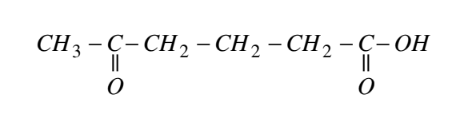
प्रश्न 154
The IUPAC name of following compound is: CH3−C(=O)−CH2−CH2−CH2−C(=O)−OH
अपना परिणाम और व्याख्या देखने के लिए एक उत्तर चुनें।
उत्तर और व्याख्या
The compound given is CH3−C(=O)−CH2−CH2−CH2−C(=O)−OH. To determine the IUPAC name, we need to identify the functional groups and the longest carbon chain, and then apply the IUPAC naming rules.
-
Identification of Functional Groups:
- The compound contains a carboxylic acid group (-COOH) at one end and a ketone group (C=O) within the chain.
-
Longest Carbon Chain:
- The longest continuous carbon chain in the compound has six carbon atoms. This makes the base name "hexanoic acid" because the carboxylic acid group takes priority in naming.
-
Position of the Ketone Group:
- The ketone group is located on the second carbon when counting from the carboxylic acid end, which is the priority functional group. Therefore, the ketone is at position 5 when the carboxylic acid is at position 1.
-
Correct IUPAC Name:
- The correct IUPAC name is "5-Oxohexanoic acid." The "5-oxo" indicates the position of the ketone group on the fifth carbon of the hexanoic acid chain.
Explanation of Incorrect Options:
-
Option 1: 6-carboxy hexan-2-one
- This name incorrectly suggests that the carboxylic acid group is at position 6, which is not possible as it is at the end of the chain. Additionally, the ketone is not at position 2 when the carboxylic acid is the priority group.
-
Option 3: Butyl methyl ketone
- This name suggests a ketone with a butyl group and a methyl group, which does not accurately describe the structure of the compound. It does not account for the carboxylic acid group.
-
Option 4: 1,5-Diketohexanol
- This name suggests two ketone groups and an alcohol group, which is incorrect. The compound has one ketone group and one carboxylic acid group, not an alcohol group.
In conclusion, Option 2, "5-Oxohexanoic acid," is the correct IUPAC name for the given compound, as it accurately reflects the structure with a ketone group at the fifth position and a carboxylic acid group at the first position of the hexanoic acid chain.
निम्नलिखित यौगिक का IUPAC नाम है : CH3−C(=O)−CH2−CH2−CH2−C(=O)−OH
अपना परिणाम और व्याख्या देखने के लिए एक उत्तर चुनें।
उत्तर और व्याख्या
निम्नलिखित यौगिक का IUPAC नाम है : CH3−C(=O)−CH2−CH2−CH2−C(=O)−OH
सही उत्तर: विकल्प 2. 5-ऑक्सोहेक्सेनोइक अम्ल
-
विकल्प 2 का समर्थन:
- यौगिक की संरचना CH3−C(=O)−CH2−CH2−CH2−C(=O)−OH में एक कार्बोक्सिलिक अम्ल समूह (-COOH) और एक कीटोन समूह (=O) शामिल हैं।
- IUPAC नामकरण के अनुसार, कार्बोक्सिलिक अम्ल समूह को प्राथमिकता दी जाती है और इसे मुख्य श्रृंखला के अंत में रखा जाता है।
- मुख्य श्रृंखला में कुल 6 कार्बन होते हैं, इसलिए इसे "हेक्सेनोइक अम्ल" कहा जाता है।
- कीटोन समूह तीसरे कार्बन पर स्थित है, जिसे "5-ऑक्सो" के रूप में नामित किया जाता है क्योंकि यह कार्बोक्सिलिक अम्ल समूह से गिना जाता है।
- इसलिए, सही IUPAC नाम "5-ऑक्सोहेक्सेनोइक अम्ल" है।
-
अन्य विकल्पों का खंडन:
- विकल्प 1: 6-कार्बोक्सी हेक्सेन-2-ओन: यह नाम गलत है क्योंकि यह मुख्य श्रृंखला के कार्बन की संख्या और समूहों की स्थिति को सही ढंग से नहीं दर्शाता है। कार्बोक्सी समूह को प्राथमिकता दी जाती है और इसे मुख्य श्रृंखला के अंत में रखा जाना चाहिए।
- विकल्प 3: ब्यूटिल मेथिल कीटोन: यह नाम गलत है क्योंकि यह यौगिक में कार्बोक्सिलिक अम्ल समूह को शामिल नहीं करता है और मुख्य श्रृंखला की लंबाई को सही ढंग से नहीं दर्शाता है।
- विकल्प 4: 1,5-डाइकीटोहेक्सेनॉल: यह नाम गलत है क्योंकि यह यौगिक में कार्बोक्सिलिक अम्ल समूह को शामिल नहीं करता है और कीटोन समूह की स्थिति को सही ढंग से नहीं दर्शाता है।
इस प्रकार, विकल्प 2 "5-ऑक्सोहेक्सेनोइक अम्ल" सही उत्तर है।
प्रश्न 155
Kaolinite is an ore of which metal ?
अपना परिणाम और व्याख्या देखने के लिए एक उत्तर चुनें।
उत्तर और व्याख्या
Kaolinite is an ore of aluminum (Al), which is why Option 1 is the correct answer. Here is a detailed explanation:
-
Explanation for Option 1 (Al):
- Kaolinite is a clay mineral, part of the group of industrial minerals, with the chemical composition Al₂Si₂O₅(OH)₄. It is a layered silicate mineral, with one tetrahedral sheet linked through oxygen atoms to one octahedral sheet of alumina. This composition clearly indicates the presence of aluminum, making kaolinite an important source of this metal. Aluminum is extracted from kaolinite through various processes, including the Bayer process, which is used to refine bauxite into alumina (aluminum oxide), and subsequently into aluminum metal.
-
Explanation for why other options are incorrect:
-
Option 2 (Zn): Zinc is typically extracted from ores such as sphalerite (zinc sulfide), not from kaolinite. Kaolinite does not contain zinc in its chemical composition, and thus it is not a source of zinc.
-
Option 3 (Fe): Iron is primarily extracted from ores like hematite and magnetite. Kaolinite does not contain iron in its structure, and therefore, it is not an ore of iron.
-
Option 4 (Cu): Copper is usually extracted from ores such as chalcopyrite and malachite. Kaolinite does not have copper in its chemical makeup, so it is not a source of copper.
-
In conclusion, kaolinite is specifically an ore of aluminum due to its chemical composition, which includes aluminum as a major component. This makes Option 1 the correct answer, while the other options do not align with the mineralogical composition of kaolinite.
केयोलिनाइट किस धातु का अयस्क है ?
अपना परिणाम और व्याख्या देखने के लिए एक उत्तर चुनें।
उत्तर और व्याख्या
केयोलिनाइट एक महत्वपूर्ण खनिज है जो मुख्य रूप से एल्यूमिनियम (Al) का अयस्क है। यह एक हाइड्रेटेड एल्युमिनियम सिलिकेट है और इसका रासायनिक सूत्र Al₂Si₂O₅(OH)₄ है। केयोलिनाइट का उपयोग मुख्य रूप से चीनी मिट्टी के बर्तन, कागज, रबर, और पेंट उद्योगों में किया जाता है। इसके अलावा, यह मिट्टी के खनिजों में से एक है जो मिट्टी की संरचना और गुणों को प्रभावित करता है।
अब हम अन्य विकल्पों पर विचार करते हैं:
-
Zn (जिंक): जिंक के प्रमुख अयस्कों में स्फैलेराइट (ZnS) शामिल है। केयोलिनाइट जिंक का अयस्क नहीं है।
-
Fe (लौह): लौह के प्रमुख अयस्कों में हेमेटाइट (Fe₂O₃) और मैग्नेटाइट (Fe₃O₄) शामिल हैं। केयोलिनाइट लौह का अयस्क नहीं है।
-
Cu (तांबा): तांबे के प्रमुख अयस्कों में चालकोपाइराइट (CuFeS₂) और मालाकाइट (Cu₂CO₃(OH)₂) शामिल हैं। केयोलिनाइट तांबे का अयस्क नहीं है।
इस प्रकार, केयोलिनाइट एल्यूमिनियम का अयस्क है और विकल्प 1 सही है।
प्रश्न 156
The correct order of energy of 2s orbitals of following is :
अपना परिणाम और व्याख्या देखने के लिए एक उत्तर चुनें।
उत्तर और व्याख्या
The correct order of energy of 2s orbitals for the elements given in Option 1 is H>Li>Na>K. Let's explore why this is the correct order and why the other options are incorrect.
Explanation for Option 1: H>Li>Na>K
-
Hydrogen (H): In hydrogen, the 2s orbital is not occupied in the ground state, but if we consider an excited state where the electron is in the 2s orbital, it will have the highest energy compared to the other elements listed. This is because hydrogen has only one electron and no electron-electron repulsion, leading to a higher energy level for the 2s orbital.
-
Lithium (Li): In lithium, the 2s orbital is occupied by the second electron. The presence of two electrons in lithium introduces electron-electron repulsion, which slightly lowers the energy of the 2s orbital compared to hydrogen.
-
Sodium (Na): Sodium has more electrons and a larger atomic size than lithium. The increased shielding effect and electron-electron repulsion in sodium further lower the energy of the 2s orbital compared to lithium.
-
Potassium (K): Potassium has an even larger atomic size and more electrons than sodium. The increased shielding and electron-electron repulsion in potassium result in the lowest energy for the 2s orbital among the elements listed.
Explanation for Incorrect Options:
-
Option 2: K>Na>Li>H
- This option suggests that the energy of the 2s orbital increases from potassium to hydrogen, which contradicts the trend of increasing atomic size and electron shielding. As atomic size increases, the energy of the 2s orbital decreases due to increased electron shielding and repulsion.
-
Option 3: H>Na>K>Li
- This option incorrectly places lithium as having the lowest energy 2s orbital. As explained, lithium should have a higher energy 2s orbital than sodium and potassium due to less electron shielding and repulsion.
-
Option 4: Na>K>Li>H
- This option incorrectly suggests that sodium and potassium have higher energy 2s orbitals than lithium and hydrogen. However, due to increased atomic size and electron shielding, the energy of the 2s orbital decreases from lithium to potassium.
In conclusion, Option 1 correctly reflects the order of energy of the 2s orbitals based on atomic size, electron shielding, and electron-electron repulsion.
निम्नलिखित में 2s कक्षकों की ऊर्जा का सही क्रम है :
अपना परिणाम और व्याख्या देखने के लिए एक उत्तर चुनें।
उत्तर और व्याख्या
Option 1, H>Li>Na>K, is the correct order of energy for the 2s orbitals of the given elements. Let's delve into the reasoning behind this order and why the other options are incorrect.
Explanation for Option 1:
-
Hydrogen (H): In hydrogen, the 2s orbital is not occupied in its ground state, as it only has one electron in the 1s orbital. However, when considering hypothetical excited states or comparing energy levels, hydrogen's 2s orbital is considered to have the highest energy due to the lack of electron shielding and minimal nuclear charge.
-
Lithium (Li): In lithium, the 2s orbital is occupied by the third electron. The energy of the 2s orbital in lithium is higher than in heavier alkali metals because the effective nuclear charge experienced by the 2s electron is relatively low, leading to less stabilization.
-
Sodium (Na): Sodium has a larger atomic number than lithium, resulting in a greater nuclear charge. This increased nuclear charge leads to a greater attraction between the nucleus and the 2s electrons, lowering the energy of the 2s orbital compared to lithium.
-
Potassium (K): Potassium, being even heavier, has an even greater nuclear charge. The 2s electrons experience a stronger attraction to the nucleus, resulting in a further decrease in energy compared to sodium.
Why Other Options are Incorrect:
-
Option 2 (K>Na>Li>H): This order suggests that potassium has the highest energy 2s orbital, which contradicts the trend of increasing nuclear charge leading to lower energy levels. As explained, potassium should have the lowest energy due to its high nuclear charge.
-
Option 3 (H>Na>K>Li): This order incorrectly places lithium with the lowest energy 2s orbital. As discussed, lithium's 2s orbital is higher in energy than those of sodium and potassium due to its lower nuclear charge.
-
Option 4 (Na>K>Li>H): This order incorrectly suggests that sodium has a higher energy 2s orbital than lithium, which is not the case. The effective nuclear charge in sodium is greater than in lithium, leading to a lower energy 2s orbital.
In conclusion, Option 1 correctly reflects the trend in 2s orbital energies based on the effective nuclear charge and electron shielding effects across these elements.
प्रश्न 157
Which of the following complex posses sp3d2 hybridization ?
अपना परिणाम और व्याख्या देखने के लिए एक उत्तर चुनें।
उत्तर और व्याख्या
To determine which complex possesses sp3d2 hybridization, we need to analyze the electronic configuration and coordination environment of each complex.
-
Option 1: [CoF6]3−
- Central Metal Ion: Cobalt (Co) in this complex is in the +3 oxidation state, so it is Co3+.
- Electronic Configuration of Co3+: The electronic configuration of Co is [Ar] 3d7 4s2. For Co3+, it becomes [Ar] 3d6.
- Ligand Field: Fluoride (F−) is a weak field ligand, which does not cause pairing of electrons in the 3d orbitals.
- Hybridization: In the presence of weak field ligands like F−, the 3d electrons remain unpaired, and the complex uses outer orbitals for hybridization. Thus, the hybridization involves 4s, 4p, and 4d orbitals, resulting in sp3d2 hybridization.
- Geometry: This hybridization leads to an octahedral geometry.
Therefore, [CoF6]3− has sp3d2 hybridization, supporting the correct answer as Option 1.
-
Option 2: [Co(NH3)6]3+
- Central Metal Ion: Cobalt (Co) in the +3 oxidation state, Co3+.
- Electronic Configuration of Co3+: [Ar] 3d6.
- Ligand Field: Ammonia (NH3) is a strong field ligand, which causes pairing of electrons in the 3d orbitals.
- Hybridization: Due to the strong field ligand, the electrons pair up, and the complex uses inner d orbitals for hybridization, resulting in d2sp3 hybridization.
- Geometry: This leads to an octahedral geometry.
Therefore, [Co(NH3)6]3+ does not have sp3d2 hybridization.
-
Option 3: [Co(C2O4)3]3−
- Central Metal Ion: Cobalt (Co) in the +3 oxidation state, Co3+.
- Electronic Configuration of Co3+: [Ar] 3d6.
- Ligand Field: Oxalate (C2O42−) is a bidentate ligand and acts as a moderate field ligand.
- Hybridization: The presence of moderate field ligands can lead to pairing of electrons, resulting in d2sp3 hybridization.
- Geometry: This also leads to an octahedral geometry.
Therefore, [Co(C2O4)3]3− does not have sp3d2 hybridization.
-
Option 4: [Mn(CN)6]3−
- Central Metal Ion: Manganese (Mn) in the +3 oxidation state, Mn3+.
- Electronic Configuration of Mn3+: [Ar] 3d4.
- Ligand Field: Cyanide (CN−) is a strong field ligand, which causes pairing of electrons in the 3d orbitals.
- Hybridization: Due to the strong field ligand, the electrons pair up, and the complex uses inner d orbitals for hybridization, resulting in d2sp3 hybridization.
- Geometry: This leads to an octahedral geometry.
Therefore, [Mn(CN)6]3− does not have sp3d2 hybridization.
In conclusion, the only complex that exhibits sp3d2 hybridization is [CoF6]3−, making Option 1 the correct answer.
निम्नलिखित किस संकुल में sp3d2 संकरण पाया जाता है ?
अपना परिणाम और व्याख्या देखने के लिए एक उत्तर चुनें।
उत्तर और व्याख्या
विकल्प 1, [CoF6]3−, में sp3d2 संकरण पाया जाता है। इस संकरण के लिए आवश्यक है कि धातु आयन के पास d-ऑर्बिटल्स खाली हों ताकि वे संकरण में भाग ले सकें।
-
विकल्प 1: [CoF6]3−
- कोबाल्ट (Co) का ऑक्सीडेशन स्टेट +3 है। इसका इलेक्ट्रॉनिक विन्यास [Ar]3d6 होता है। जब यह [CoF6]3− आयन बनाता है, तो यह 6 फ्लोराइड आयनों के साथ समन्वय करता है। फ्लोराइड एक कमजोर क्षेत्र का लिगैंड है, जो उच्च स्पिन जटिलता बनाता है। इस स्थिति में, 3d ऑर्बिटल्स में इलेक्ट्रॉनों की जोड़ी नहीं बनती है, और 4s, 4p, और 4d ऑर्बिटल्स का उपयोग करके sp3d2 संकरण होता है।
-
विकल्प 2: [Co(NH3)6]3+
- इस जटिल में, अमोनिया एक मजबूत क्षेत्र का लिगैंड है, जो d2sp3 संकरण को प्रेरित करता है, न कि sp3d2। यह निम्न स्पिन जटिलता बनाता है।
-
विकल्प 3: [Co(C2O4)3]3−
- ऑक्सालेट एक द्विपरमाणुक लिगैंड है और यह भी एक मजबूत क्षेत्र का लिगैंड है। यह d2sp3 संकरण को प्रेरित करता है, जो निम्न स्पिन जटिलता बनाता है।
-
विकल्प 4: [Mn(CN)6]3−
- साइनाइड एक बहुत ही मजबूत क्षेत्र का लिगैंड है, जो d2sp3 संकरण को प्रेरित करता है। यह भी निम्न स्पिन जटिलता बनाता है।
इस प्रकार, केवल विकल्प 1, [CoF6]3−, में sp3d2 संकरण पाया जाता है, जो इसे सही उत्तर बनाता है।
प्रश्न 158
In the following disproportionation reaction P4(s)+3OH−(aq)+3H2O(l)→PH3(g)+3H2PO2−, the oxidation states of P in P4, PH3 and H2PO2− are respectively:
अपना परिणाम और व्याख्या देखने के लिए एक उत्तर चुनें।
उत्तर और व्याख्या
To determine the oxidation states of phosphorus (P) in the given disproportionation reaction, we need to analyze each compound involved:
-
P4(s): In elemental phosphorus, P4, each phosphorus atom is in its elemental form. The oxidation state of an element in its standard state is always 0. Therefore, the oxidation state of P in P4 is 0.
-
PH3(g): In phosphine (PH3), hydrogen has an oxidation state of +1. Since there are three hydrogen atoms, the total contribution from hydrogen is +3. To balance this, phosphorus must have an oxidation state of -3, because the sum of oxidation states in a neutral molecule must be zero. Therefore, the oxidation state of P in PH3 is -3.
-
H2PO2−: In the hypophosphite ion (H2PO2−), hydrogen has an oxidation state of +1, and there are two hydrogen atoms, contributing a total of +2. Oxygen typically has an oxidation state of -2, and there are two oxygen atoms, contributing a total of -4. The overall charge of the ion is -1. Let the oxidation state of phosphorus be x. The equation for the sum of oxidation states is:
[
2(+1) + x + 2(-2) = -1
]Simplifying this gives:
[
2 + x - 4 = -1 \
x - 2 = -1 \
x = +1
]Therefore, the oxidation state of P in H2PO2− is +1.
Based on this analysis, the oxidation states of P in P4, PH3, and H2PO2− are 0, -3, and +1, respectively. This matches Option 4: 0, -3, +1.
Explanation of why other options are incorrect:
-
Option 1 (4, 3, 2): This option suggests oxidation states of 4, 3, and 2 for P4, PH3, and H2PO2−, respectively. This is incorrect because the oxidation state of P in P4 is 0, not 4. Additionally, the oxidation state of P in PH3 is -3, not 3, and in H2PO2−, it is +1, not 2.
-
Option 2 (4, -3, -2): This option incorrectly assigns an oxidation state of 4 to P4, which should be 0. It also incorrectly assigns an oxidation state of -2 to H2PO2−, which should be +1.
-
Option 3 (0, +3, +1): This option correctly identifies the oxidation state of P in P4 as 0 and in H2PO2− as +1, but it incorrectly assigns an oxidation state of +3 to PH3, which should be -3.
Thus, Option 4 is the only correct choice, as it accurately reflects the oxidation states of phosphorus in each compound involved in the reaction.
निम्नलिखित असमानुपातन अभिक्रिया में P4(s)+3OH−(aq)+3H2O(l)→PH3(g)+3H2PO2−, P की ऑक्सीकरण अवस्था P4, PH3 और H2PO2− में क्रमशः है :
अपना परिणाम और व्याख्या देखने के लिए एक उत्तर चुनें।
उत्तर और व्याख्या
प्रश्न में दी गई असमानुपातन अभिक्रिया है:
[ P_{4}(s) + 3OH^{-}(aq) + 3H_{2}O(l) \rightarrow PH_{3}(g) + 3H_{2}PO_{2}^{-} ]
इस अभिक्रिया में हमें P4, PH3 और H2PO2− में फॉस्फोरस की ऑक्सीकरण अवस्था ज्ञात करनी है।
-
P4 में फॉस्फोरस की ऑक्सीकरण अवस्था:
- P4 एक तत्वीय अवस्था में है, और किसी भी तत्व की ऑक्सीकरण अवस्था उसकी तत्वीय अवस्था में 0 होती है। इसलिए, P4 में फॉस्फोरस की ऑक्सीकरण अवस्था 0 है।
-
PH3 में फॉस्फोरस की ऑक्सीकरण अवस्था:
- PH3 में हाइड्रोजन की ऑक्सीकरण अवस्था +1 होती है। चूंकि PH3 में तीन हाइड्रोजन हैं, कुल ऑक्सीकरण अवस्था +3 होगी। फॉस्फोरस की ऑक्सीकरण अवस्था x मानते हुए:
[ x + 3(+1) = 0 ]
[ x + 3 = 0 ]
[ x = -3 ] - इसलिए, PH3 में फॉस्फोरस की ऑक्सीकरण अवस्था -3 है।
- PH3 में हाइड्रोजन की ऑक्सीकरण अवस्था +1 होती है। चूंकि PH3 में तीन हाइड्रोजन हैं, कुल ऑक्सीकरण अवस्था +3 होगी। फॉस्फोरस की ऑक्सीकरण अवस्था x मानते हुए:
-
H2PO2− में फॉस्फोरस की ऑक्सीकरण अवस्था:
- H2PO2− में हाइड्रोजन की ऑक्सीकरण अवस्था +1 और ऑक्सीजन की ऑक्सीकरण अवस्था -2 होती है। आयन की कुल ऑक्सीकरण अवस्था -1 है। फॉस्फोरस की ऑक्सीकरण अवस्था x मानते हुए:
[ 2(+1) + x + 2(-2) = -1 ]
[ 2 + x - 4 = -1 ]
[ x - 2 = -1 ]
[ x = +1 ] - इसलिए, H2PO2− में फॉस्फोरस की ऑक्सीकरण अवस्था +1 है।
- H2PO2− में हाइड्रोजन की ऑक्सीकरण अवस्था +1 और ऑक्सीजन की ऑक्सीकरण अवस्था -2 होती है। आयन की कुल ऑक्सीकरण अवस्था -1 है। फॉस्फोरस की ऑक्सीकरण अवस्था x मानते हुए:
इस प्रकार, P4, PH3 और H2PO2− में फॉस्फोरस की ऑक्सीकरण अवस्थाएँ क्रमशः 0, -3, और +1 हैं। इसलिए, सही विकल्प 4 है: 0, -3, +1।
अन्य विकल्प क्यों गलत हैं:
-
विकल्प 1: 4, 3, 2
- यह गलत है क्योंकि P4 में फॉस्फोरस की ऑक्सीकरण अवस्था 0 है, न कि 4।
-
विकल्प 2: 4, -3, -2
- यह गलत है क्योंकि P4 में फॉस्फोरस की ऑक्सीकरण अवस्था 0 है, न कि 4, और H2PO2− में फॉस्फोरस की ऑक्सीकरण अवस्था +1 है, न कि -2।
-
विकल्प 3: 0, +3, +1
- यह गलत है क्योंकि PH3 में फॉस्फोरस की ऑक्सीकरण अवस्था -3 है, न कि +3।
इस प्रकार, विकल्प 4 सही है और अन्य विकल्प गलत हैं।
प्रश्न 159
The element Z=117 would be placed in which family of periodic table ?
अपना परिणाम और व्याख्या देखने के लिए एक उत्तर चुनें।
उत्तर और व्याख्या
The element with atomic number Z=117 is known as Tennessine (Ts). It is placed in the halogen family of the periodic table. Here is a detailed explanation supporting why Option 2 is correct and why the other options are incorrect:
-
Justification for Option 2 (Halogen family):
- The halogen family is located in Group 17 of the periodic table. This group includes elements such as fluorine, chlorine, bromine, iodine, and astatine. These elements are known for having seven valence electrons, which makes them highly reactive, particularly with alkali metals and alkaline earth metals, to form salts.
- Tennessine, with an atomic number of 117, is placed in Group 17, aligning it with the halogens. Although it is a synthetic element and its properties are not fully known due to its instability and radioactivity, it is expected to share characteristics with other halogens based on its position in the periodic table.
-
Explanation for why other options are incorrect:
- Option 1 (Alkali metals): Alkali metals are located in Group 1 of the periodic table. These elements, such as lithium, sodium, and potassium, have one valence electron and are highly reactive, especially with water. Tennessine does not belong to this group as it is in Group 17.
- Option 3 (Alkaline earth metals): Alkaline earth metals are found in Group 2 of the periodic table. This group includes elements like beryllium, magnesium, and calcium, which have two valence electrons. Tennessine is not part of this group, as it is positioned in Group 17.
- Option 4 (Noble gases): Noble gases are located in Group 18 of the periodic table. These elements, such as helium, neon, and argon, are characterized by having a full valence shell, making them very stable and mostly inert. Tennessine, being in Group 17, does not share these properties and is not a noble gas.
In conclusion, based on its position in the periodic table, Tennessine (Z=117) is correctly placed in the halogen family, supporting Option 2 as the correct answer.
Z=117 वाले तत्त्व का स्थान आवर्त सारणी के किस परिवार में होना चाहिए ?
अपना परिणाम और व्याख्या देखने के लिए एक उत्तर चुनें।
उत्तर और व्याख्या
तत्त्व Z=117 का स्थान आवर्त सारणी के हैलोजन परिवार में होना चाहिए। यह निष्कर्ष निम्नलिखित कारणों से सही है:
-
हैलोजन परिवार की विशेषताएँ: हैलोजन समूह आवर्त सारणी का समूह 17 है, जिसमें फ्लोरीन, क्लोरीन, ब्रोमीन, आयोडीन, और एस्टेटीन शामिल हैं। ये सभी तत्व अत्यधिक प्रतिक्रियाशील होते हैं और इनमें सात वैलेन्स इलेक्ट्रॉन होते हैं। तत्त्व 117, जिसे टेनेसाइन (Ts) कहा जाता है, इसी समूह का सदस्य है और इसकी रासायनिक विशेषताएँ हैलोजन परिवार के अन्य तत्वों के समान होती हैं।
-
अन्य विकल्पों की असंगति:
- क्षारीय धातु (Option 1): क्षारीय धातु समूह 1 में होते हैं, जिनमें एक वैलेन्स इलेक्ट्रॉन होता है। ये तत्व अत्यधिक प्रतिक्रियाशील होते हैं और आमतौर पर धातु होते हैं। तत्त्व 117 इन विशेषताओं से मेल नहीं खाता।
- क्षारीय मृदा धातुएँ (Option 3): ये तत्व समूह 2 में होते हैं और इनमें दो वैलेन्स इलेक्ट्रॉन होते हैं। ये भी धातु होते हैं और तत्त्व 117 की रासायनिक विशेषताओं से मेल नहीं खाते।
- उत्कृष्ट गैस (Option 4): उत्कृष्ट गैसें समूह 18 में होती हैं और इनमें आठ वैलेन्स इलेक्ट्रॉन होते हैं (हीलियम को छोड़कर, जिसमें दो होते हैं)। ये तत्व अत्यधिक स्थिर होते हैं और रासायनिक रूप से निष्क्रिय होते हैं। तत्त्व 117 की प्रतिक्रियाशीलता इसे इस समूह में रखने के लिए उपयुक्त नहीं बनाती।
इस प्रकार, तत्त्व Z=117 का स्थान आवर्त सारणी के हैलोजन परिवार में होना सही है।
प्रश्न 160
The oxidation state of each oxygen atom in KO2 is:
अपना परिणाम और व्याख्या देखने के लिए एक उत्तर चुनें।
उत्तर और व्याख्या
The oxidation state of each oxygen atom in KO2 is indeed -1/2, as indicated by Option 3. Let's delve into the reasoning behind this:
-
Explanation for Option 3 (-1/2):
- Potassium superoxide (KO2) is a compound where potassium (K) is combined with the superoxide ion (O2−). In this compound, potassium typically has an oxidation state of +1, as it is an alkali metal and tends to lose one electron.
- The superoxide ion (O2−) consists of two oxygen atoms sharing a total charge of -1. To find the oxidation state of each oxygen atom in the superoxide ion, we divide the total charge by the number of oxygen atoms:
[
\text{Oxidation state of each O} = \frac{-1}{2} = -\frac{1}{2}
] - Therefore, each oxygen atom in KO2 has an oxidation state of -1/2, which confirms that Option 3 is correct.
-
Explanation for why other options are incorrect:
- Option 1 (-2): This oxidation state is typical for oxygen in most compounds, such as oxides (e.g., H2O, CO2). However, in the superoxide ion, the oxygen atoms do not achieve the -2 oxidation state because the total charge of the ion is only -1, not -2.
- Option 2 (-1): This oxidation state is characteristic of the peroxide ion (O22−), where each oxygen atom has an oxidation state of -1. However, in the superoxide ion (O2−), the total charge is -1, not -2, so each oxygen atom cannot have an oxidation state of -1.
- Option 4 (0): An oxidation state of 0 would imply that the oxygen atoms are in their elemental form, such as in O2 gas. In KO2, the oxygen atoms are part of the superoxide ion, which carries a charge, so their oxidation state cannot be 0.
In conclusion, the correct oxidation state of each oxygen atom in KO2 is -1/2, as supported by the structure and charge of the superoxide ion. This validates Option 3 as the correct answer.
KO2 में प्रत्येक ऑक्सीजन परमाणु की ऑक्सीकरण संख्या है :
अपना परिणाम और व्याख्या देखने के लिए एक उत्तर चुनें।
उत्तर और व्याख्या
KO2 एक पोटेशियम सुपरऑक्साइड है, जिसमें सुपरऑक्साइड आयन (O2−) होता है। सुपरऑक्साइड आयन में, दो ऑक्सीजन परमाणु होते हैं और कुल चार इलेक्ट्रॉन होते हैं। सुपरऑक्साइड आयन की कुल चार्ज -1 होती है।
अब, हम प्रत्येक ऑक्सीजन परमाणु की ऑक्सीकरण संख्या की गणना करते हैं। सुपरऑक्साइड आयन में, दो ऑक्सीजन परमाणु मिलकर -1 चार्ज बनाते हैं। इसलिए, प्रत्येक ऑक्सीजन परमाणु की ऑक्सीकरण संख्या -1/2 होती है।
इस प्रकार, विकल्प 3 सही है क्योंकि यह बताता है कि KO2 में प्रत्येक ऑक्सीजन परमाणु की ऑक्सीकरण संख्या -1/2 है।
अन्य विकल्प क्यों गलत हैं:
-
विकल्प 1 (-2): यह ऑक्सीकरण संख्या ऑक्साइड आयन (O2−) के लिए होती है, लेकिन सुपरऑक्साइड आयन के लिए नहीं।
-
विकल्प 2 (-1): यह ऑक्सीकरण संख्या पेरॉक्साइड आयन (O22−) के लिए होती है, लेकिन सुपरऑक्साइड आयन के लिए नहीं।
-
विकल्प 4 (0): यह ऑक्सीकरण संख्या न्यूट्रल ऑक्सीजन अणु (O2) के लिए होती है, लेकिन सुपरऑक्साइड आयन के लिए नहीं।
इस प्रकार, विकल्प 3 सही है और अन्य विकल्प गलत हैं।